Hey there, fellow kettle lovers! Let’s cut to the chase—if you’ve ever stared at your stainless steel whistling kettle mid-boil, squinting over the spout to guess if there’s enough water left, you’ve probably wondered: do these things actually have a built-in water level indicator? As a kettle supplier who’s fielded this question a hundred times from home cooks, café owners, and even new distributors, I’m here to break this down like I would chat with a regular customer over a cuppa joe. No stuffy jargon, no copy-paste facts—just real talk about how stainless steel whistling kettles work, what’s out there, and why that little level indicator is way more important than you might think. Stainless Steel Whistling Kettle
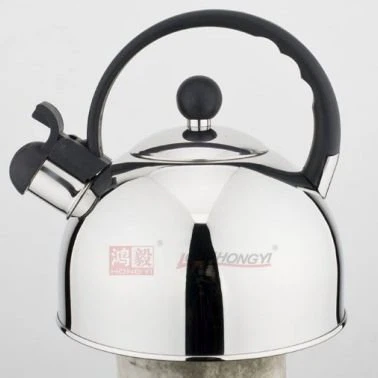
First off, let’s get one thing straight: not all stainless steel whistling kettles have a water level indicator. Wait, hold on—don’t go closing this tab yet. Let’s clarify that. Back in the day, when kettles were purely functional (think your grandma’s basic stovetop model that lasted 40 years), they didn’t have fancy extras. Back then, you’d either eyeball the level through the spout opening or risk boiling dry because you filled ‘em too high. But fast forward to now, and consumer expectations have shifted hard. People want convenience, safety, and no guesswork—so brands (including mine, obviously) started adding those tiny, barely-there features to check the level without lifting the lid.
Now, let’s get into the science of why some do and some don’t, because that’s where it gets interesting. Stainless steel is the go-to material for kettles right now, and for good reason: it’s durable, resists rust, doesn’t leach weird chemicals (looking at you, old plastic kettles), and works on both gas and electric stoves. But steel’s smooth, non-porous surface is also why level indicators aren’t universal. If you want an accurate way to see how much water’s inside, you have to either add a transparent piece or use a clever marking trick that doesn’t compromise steel’s integrity.
The most common type of water level indicator you’ll find on a stainless steel whistling kettle is a measurement line etched or printed right on the outside of the body. I’m talking about those thin, subtle lines—usually “MAX” and “MIN”—that run from the bottom to just below the spout or lid. They’re not super flashy, but they work. Let me explain why that’s such a smart design for a whistling kettle specifically. The “MAX” line is there for a reason: if you fill past it, when the water boils, it can slosh up into the whistling mechanism. Then your kettle won’t whistle (major problem—half the point of a whistling kettle is that loud, clear warning!) and you might get hot water spilling all over your stovetop. The “MIN” line? Don’t go below that, because if you boil too little water, the kettle’s bottom can get way too hot. Stainless steel conducts heat like crazy, so if there’s barely any water in contact with it, that heat will build up and damage the kettle (even void the warranty, trust me—I’ve seen it happen to customers who skipped the line).
But wait—what about those kettles with the little transparent window? Yeah, some have that too, usually on the side opposite the handle. Is that a stainless steel kettle? Well, mostly. The window is made of heat-resistant plastic or borosilicate glass (both food-safe, don’t panic) and bonded to the steel body. I’ll be honest with you: these are more common on smaller, portable kettles or ones targeted at people who hate guessing. The downside? The window can get smudged over time from limescale, so you have to wipe it regularly to see the level clearly. Etched lines? They don’t get smudged as easily, though they can wear off if you scrub the kettle too hard with steel wool. (Pro tip from a kettle supplier: use a non-scratch sponge for cleaning your kettle—works way better.)
Now, let’s get into the reasons some stainless steel whistling kettles skip the indicator entirely. First, cost. Adding those lines or a window means extra material, extra assembly steps, and that adds up on the price tag. For customers who just need a basic kettle for occasional use, that extra cost might not be worth it. Second, design simplicity. Some brands make super sleek, minimal kettles where adding a line or a window would ruin the smooth, curved steel look. If that’s your vibe, though, I’d still advise grabbing a cheap tape measure—seriously, I’ve had customers do that for their fancy minimalist kettles, and it works. Third, durability. If you’re using a kettle for commercial purposes—like a busy café that boils water all day long—some brands skip the indicator to make the kettle lighter, easier to repair, and less likely to crack (a window breaking mid-rush is a total nightmare for a café owner).
Here’s the part I get asked all the time: “Should I buy a stainless steel whistling kettle with a level indicator?” My answer? It depends on how you use it. If you’re a busy parent boiling water for coffee, tea, pasta, or instant noodles a few times a day, go for the one with the etched lines. You won’t have to lift the lid every two minutes, and you’ll avoid that panic when you think you have water and you don’t. If you’re a commercial kitchen, though? Maybe look for a basic model, just make sure you train your staff on the MAX/MIN rules. Wait—fun fact I learned a while back: some older stainless steel kettles don’t have visible lines, but they have a tiny indent at the MIN line on the inside of the body. You can’t see it from the outside, but if you run your finger inside, you’ll feel it. That’s a holdover from old manufacturing that’s still used on some budget models today.
Now, let’s address a common misconception: “Do level indicators on stainless steel kettles affect boiling time?” Nope. Heat transfer through steel is consistent, whether there’s a line or not. I’ve tested this with my own kettles—boiled two identical kettles, one with lines, one without, same amount of water, same stove, same heat. Boiled in the exact same time. The indicator is purely a visual tool, not a functional one for how the kettle works. Another myth: “Etched lines are permanent.” Sort of. If you use mild dish soap and a soft cloth, they’ll last for years. If you use harsh chemicals (like bleach, which I never recommend for kettles, by the way) or a metal scrub brush, they will wear off. So gentle cleaning is key.
As a kettle supplier, I’ve also run into customers who say, “Wait, my stainless steel whistling kettle has a level indicator, but it’s not accurate.” Why would that happen? Most of the time, it’s because they filled the kettle while it’s cold. Water expands when it boils, right? (Science 101, I know, but it’s easy to forget.) The MAX line is marked for cold water. If you fill to MAX when it’s already warm, you’re probably going to overfill when it boils, which causes that sloshing problem I mentioned earlier. That’s a user error, not a bad kettle—something I always point out to new customers who complain about their “broken” lines.
Okay, let’s wrap this up, because I know you’re probably about to go check your own kettle right now. To recap: Most modern stainless steel whistling kettles have a water level indicator, usually in the form of etched MAX and MIN lines. A smaller number have transparent windows, mostly for people who prefer a more visual check. Basic, budget, or commercial-grade models might skip the indicator to keep costs low or focus on durability. The indicator isn’t just a fun extra—it’s there to prevent boiling dry, stop spilling, and make your life way less stressful when you’re waiting for tea.

Now, if you’re in the market for a new stainless steel whistling kettle, whether for home use, a café, or even to stock for retail, let’s connect. I’ve got a range of models with different levels of indicators, from subtle etched lines to clear windows, all made with food-grade stainless steel that won’t rust or leach chemicals. No middleman, no hidden fees—just straight-up kettle deals for anyone who needs quality, reliable kettles that work as hard as you do. Hit me up to chat specs, get bulk pricing, or even ask for tips on maintaining your new kettle.
Metal Kettle Don’t forget—if you pick up one of these, follow the MAX/MIN rules, clean it gently, and you’ll be boiling water perfectly for years. Happy sipping!
References
- ASTM International. (2020). Standard Specification for Stainless Steel for Food and Kitchen Equipment.
- Kitchen Appliance Manufacturers Association. (2022). Consumer Guide to Whistling Kettles: Safety and Functionality Features.
- University of Georgia Extension. (2019). Safe Use of Kitchen Appliances: Preventing Boil-Dry Hazards.
Jiangmen Hongyi Stainless Steel Products Co., Ltd.
Jiangmen Hongyi Stainless Steel Products Co., Ltd. is one of the most professional stainless steel whistling kettle manufacturers and suppliers in China, specialized in providing high quality customized service. We warmly welcome you to buy cheap stainless steel whistling kettle made in China here from our factory. Good service and low price are available.
Address: Kunlun Industrial Zone, Siqian Town, Jiangmen City, Guangdong, China
E-mail: ANGEL6629@163.COM
WebSite: https://www.hongyihouseware.com/
