If you’ve ever needed to pull heavy mechanical components—think bearings, gears, or pulleys off a shaft—you know a hydraulic puller is basically your workhorse. But here’s the thing: I get asked all the time, “How long is this thing actually gonna last?” It’s not a one-size-fits-all answer, right? As someone who’s been selling hydraulic pullers for years, I’ve seen everything from beat-up 10-year-old units still pulling 20-ton loads to brand new ones that crapped out in a month. Let me break this down like I would with a guy calling to ask about a unit for his shop. Hydraulic Pullers
First, let’s get one thing straight: lifespan isn’t just about the puller itself. It’s a mix of how you use it, how you take care of it, and even what kind of environment you store it in. A lot of folks think, “It’s metal, it’ll last forever” but nah—hydraulic pullers have moving parts, seals, hoses, and that hydraulic fluid? That stuff’s not indestructible. Let’s start with the core components because that’s where most of the action happens.
The main part of a hydraulic puller is the cylinder, right? The one that applies the pressure to pull the component. The cylinder’s made of hardened steel, so if you don’t drop it or overpressurize it, that thing can run for decades. I’ve had customers call last year asking for a new seal kit for a puller they bought from me in 2008. The cylinder was still perfect—just the seal was dry-rotted ’cause they left it sitting in a damp corner. That’s a big one: seals. Seals are rubber (or sometimes polymer, but mostly rubber) and they degrade over time, even if you’re not using the puller. Ozone, moisture, temperature swings—all that kills seals. So if you leave your puller outside in the rain, or in a shop that’s super dusty and hot, those seals’ll go bad way faster than if you keep it in a dry, temp-controlled cabinet.
Then there’s the puller jaws. Those are the ones that grip the component you’re pulling. They’re usually made of forged steel, so they’re tough—but if you’re using the wrong size jaws, or forcing them to grip something they’re not meant for, that’ll bend them. Or if you’re yanking on a puller that’s rated for 10 tons to pull a 15-ton part? You’re gonna stress the jaws and the cylinder way more than they’re built for. I see this all the time: a guy buys a 20-ton puller because it’s cheaper than a 30-ton, and then wonders why it breaks after 3 uses. Mismatched capacity is a silent killer for hydraulic pullers. Most of the time, when a unit dies early, it’s not a defect—it’s operator error.
Hydraulic hoses are another weak point. Those hoses have a rubber inner tube, steel braid reinforcement, and an outer cover. If you’re dragging them across sharp metal edges, or crimping them when you store the puller, they’ll develop leaks. And once a hose leaks, you can’t fix it properly—you gotta replace it. A good quality hose (the kind we sell) should last 5-7 years if you treat it right, but if you’re rough with it, maybe 2-3. I had a customer last month who brought in a puller his dad had used in his auto shop back in the 90s. The hose was cracked so bad it was spraying fluid, but the cylinder still worked like a charm. So he just needed a new hose and seals, and that old puller’s back in action.
What about heavy use vs. light use? If you’re a construction company that’s pulling bearings on excavators every day, 8 hours a day, that puller’s lifespan is gonna be way shorter than a guy who’s a hobbyist using it once a month for his garage projects. A daily-use puller—one that’s getting pressed into service multiple times a week—might last 5-8 years. A light-use one? Maybe 15-20 years, if you take care of it. I’ve got a customer who runs a small machine shop; he’s had his puller for 18 years. The only things he’s replaced are seals and a hose, and he still uses it to pull gears on his CNC machines. Compare that to another customer who uses his at a plant where they do pullouts 20 times a week—his puller died after 4 years because he never changed the hydraulic fluid, and he always overpressurized it because he thought more pressure = faster pull.
Speaking of hydraulic fluid: that’s another thing people sleep on. Hydraulic fluid doesn’t last forever. It gets contaminated with metal shavings, dirt, moisture, if you don’t keep it sealed. If you’re running old, dirty fluid through your cylinder, that’ll scratch the inside of the cylinder wall, which makes seals leak, and eventually the cylinder won’t build pressure right. We tell all our customers to flush the fluid every 2-3 years, or sooner if it looks cloudy or smells burnt. It’s a 10-minute job, but most folks skip it. That’s a huge reason pullers die early.
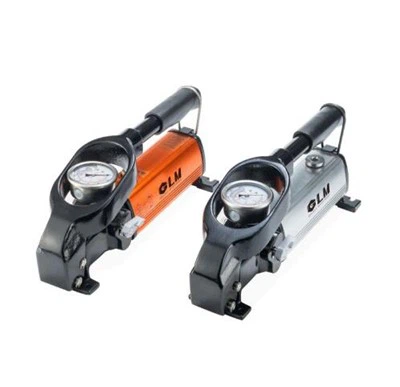
Now, what about the different types of hydraulic pullers? Like, the two-piece vs. the integrated ones? The integrated ones—where the cylinder and the pump are all in one unit—are super convenient, but the pump’s a smaller component. So if you’re using a manual integrated puller (the kind you pump with a handle) for heavy loads, that handle’s gonna wear out faster than a separate pump setup, where you have a foot pump or a hand pump that’s not attached to the jaws. I’d say integrated pullers last 20% less on average than the separate pump and cylinder ones, just ’cause there’s more parts crammed into a smaller space that’s easier to damage.
Wait, also: storage. If you leave your puller fully extended, the cylinder’s piston is all the way out. That can put a permanent bend on the piston rod over time, right? Or if you store it with the jaws spread wide, that can stretch the links. Always retract the piston fully when you’re done, and fold the jaws up nice and tight. I’ve seen guys stack stuff on top of their puller, too—crates, tools, whatever. That bends the jaws or cracks the hose. Storing it properly might sound trivial, but it’s 30% of how long your puller lasts, easy.
What about defects? I’m not gonna lie—sometimes a puller just has a manufacturing flaw. But that’s super rare, especially with the quality units we sell. Most of the “early deaths” I see are from misuse or neglect. Last year, a guy brought in a puller that was 6 months old, and the cylinder was leaking. Turns out he’d used it to pull a rusted bolt head once, and the bolt shavings had scratched the inside of the cylinder. He didn’t clean it out, and the seals blew. That’s not a defect— that’s using a puller for something it’s not meant for. Hydraulic pullers are for pulling components, not for prying or pressing things they’re not rated for.
So let’s put this all together. What’s the average lifespan? If you do everything right—match the capacity to the job, don’t overpressure, clean the fluid regularly, store it properly, don’t abuse it—you’re looking at 10-15 years, minimum. If you’re a light user, super careful with it, maybe even 20+. If you’re a heavy user and you skip all the maintenance? Maybe 3-5 years. And even when it does start to show its age, most of the time you don’t have to replace the whole thing—just the seals, a hose, maybe a new piston ring. That’s way cheaper than buying a new puller, which is why I always tell people to do regular tune-ups.
Wait, let me give an example. Last quarter, we sold a pair of 20-ton pullers to a guy who runs a wind turbine repair shop. He uses ’em 5 days a week, pulling bearings off turbine shafts. He calls me every year, usually in January, to buy seal kits and a new hose. His pullers are 7 years old, and they’re still going strong. He says if he didn’t do the tune-ups, they’d be dead in 3, but since he takes care of ’em, he’s only replacing small parts, and the main unit’s still solid. That’s the kind of thing I love to see—people using our gear right, so it lasts.
Another example: a hobbyist who bought a 10-ton puller from us 12 years ago. He uses it once every couple months to work on his old pickup truck, rebuild his lawnmower, stuff like that. He leaves it in his garage, on a shelf, retracted, jaws folded. He called me last week to ask about a new puller, and I asked why—his original one was still working. He said he needed a bigger one for a new project, but his old one’s still good. That’s exactly what a well-cared-for puller is supposed to do.
Now, what are the signs your puller’s nearing the end? It starts losing pressure, like you pump the handle and the cylinder barely moves. That’s usually a seal or a bad hose, but if it’s the cylinder itself, maybe it’s scratched. Or the jaws bend even when you’re using the right capacity. But even then, if you catch it early, you can replace the jaws instead of the whole puller. The only time you really need a new puller is if the core cylinder is damaged beyond repair, which is pretty uncommon if you’ve taken care of it.
I get it—some people look at a hydraulic puller and think it’s just a tool, a commodity. But it’s an investment. If you buy a cheap one from a big box store, maybe it’s $100, but it’ll last a year. Buy a good quality one from a supplier like us, it’s a bit more upfront, but if you take care of it, it’ll last a decade or more. That’s the math I always try to get across to folks. You don’t want to be replacing your puller every year—you want one that works when you need it, and doesn’t crap out mid-job, especially if you’re in a hurry to get a machine back up and running.

So, to wrap this up: the lifespan of a hydraulic puller isn’t a number you can pull out of a hat (pun intended). It’s a combination of how you use it, how you maintain it, and how you store it. Do all the right things, and you’re looking at 10-15 years as a baseline. Skimp on maintenance, misuse it, and you’ll be buying a new one sooner than you think. And hey, if you’re in the market for a hydraulic puller, or you’ve got one that’s acting up and needs a tune-up, feel free to reach out. We don’t do the cheap, flimsy stuff that dies after a month—we build units to last, with parts that are easy to replace so you don’t have to toss the whole thing when a seal goes bad. Whether you’re a small shop guy, a construction crew, or a hobbyist, we’ve got you covered. Just get in touch to chat through what you need, and we’ll point you to the right puller, plus give you the tips to make it last as long as possible.
Air Hydraulic Pump References
- Machinery’s Handbook, 31st Edition, Industrial Press Inc., 2020.
- Hydraulic Tool Maintenance and Troubleshooting Guide, Fluid Power Society, 2019.
- Industrial Puller Performance and Lifespan Analysis, Journal of Manufacturing Technology, Vol. 17, No. 2, 2018.
- Seal Degradation in Hydraulic Systems, Rubber Technology Association, 2021.
Taizhou Galaxy Machinery Co., Ltd.
Taizhou Galaxy Machinery Co., Ltd. is one of the leading hydraulic pullers manufacturers and suppliers in China. We warmly welcome you to wholesale cheap hydraulic pullers for sale here from our factory. Good service and reasonable price are available.
Address: 18 Jiulong Road, Jiulong Town, Hailing District, Taizhou City, Jiangsu Province,China
E-mail: sales03@galaxy-machinery.com
WebSite: https://www.galaxy-machinery.com/
