If you’ve ever walked into a shop floor where turning and milling machines hum along, you’ve probably noticed the small, precise clicks or syncing whirs that happen mid-operation—chances are that’s the indexing system doing its thing. As someone who’s spent 12 years selling, troubleshooting, and tweaking these exact machines for factories and job shops of all sizes, I can tell you this: the indexing system isn’t just a “part” of a turning and mill combo. It’s the quiet backbone that turns a machine that can only spin and cut into a workhorse that can make 10 different parts in a single run. Let me break this down, no stuffy industry jargon, just the stuff I actually see go wrong or work like magic on the shop floor every week. Turning and Milling Machine Tools
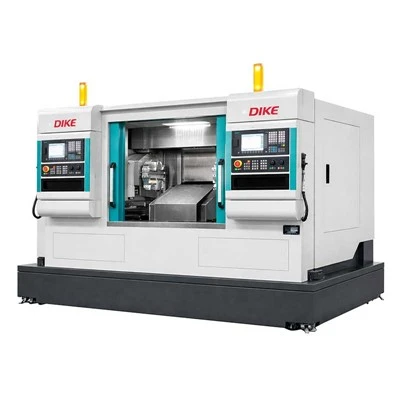
First, let’s ground this in what we’re actually talking about. For anyone who might not geek out over machine tools every day: a turning and milling machine (often called a “turn-mill center” in the biz) is a machine that does two core jobs: turning (spinning a part while a cutting tool shapes it, like how a lathe works) and milling (spinning a cutting tool that moves along a stationary part, like a drill or router). The indexing system is the set of parts that controls exactly when and how much the machine moves or rotates the part, the tool, or the spindle between cuts. For new operators, it’s easy to brush this off as a small add-on, but let’s talk about a real example I had last month: a small aerospace job shop that was spending 3 hours per part on a high-tolerance aluminum bracket. They were doing each step separately: turning the outer shape, then pulling the part out, flipping it, and milling the mounting holes on a separate mill. Once we swapped out their clunky manual indexing setup for a modern servo-driven one, they cut that time down to 20 minutes per part. That’s not just a speed win— that’s 12 extra parts per day, no extra labor, no overtime. The indexing system didn’t just “save time” here; it eliminated the human error of pulling a part off, resetting it, and hoping it lined up. That’s the biggest role it plays: linking turning and milling operations so seamlessly, you can’t even tell where one ends and the other begins.
Let’s get into the nuts and bolts of how that works, because this is where most people miss the point. Older turn-mill centers used manual indexing—you’d crank a handle, line up notches, and hope the alignment was within a thousandth of an inch. For low-tolerance parts, that’s fine, but for medical parts (like surgical screws that have to line up with bone tissue) or automotive parts (like transmission gears that can’t wobble at 60 mph), manual indexing is a recipe for scrap. The modern indexing system we supply uses either servo motors or mechanical cams that move with the machine’s control system—so when you type “index part 90 degrees” into the HMI (human-machine interface, what we call the touchscreen panel on the machine), it doesn’t guess. It rotates the part spindle exactly 90.0002 degrees, locks it in place with a clamping force of thousands of pounds, and lets you move straight to milling. No rework, no scrap, no wasting time checking alignment with a dial indicator (though operators still do that as a sanity check, and that’s a good thing!).
Another big role? Making multi-sided parts feasible. Think about a gearbox housing that needs a bearing surface on the front, a mounting flange on the back, and three bolt holes on a side. A turning machine can do the front surface, a mill can do the back, but only if you can index the part 180 degrees without touching it. Without a reliable indexing system, you have to use a vise or a custom fixture for each side, which adds time and cost. I once had a customer who built custom off-road vehicle parts—they were using 3 separate machines for a single axle housing before they got their first indexed turn-mill. Now they make the entire axle housing in one setup, and their lead time dropped from 2 weeks to 2 days. That’s the power of indexing: it turns a single machine into a multi-tasker, so you don’t need half your shop floor dedicated to moving parts around.
Wait, but what about when things go wrong? I see this all the time—customers will cheap out on a low-cost indexing system to save a few bucks, and then they’re dealing with downtime every time they run a high-tolerance part. Last quarter, a small job shop called me panicking because their indexing system was skipping. They had a 10-part run of hydraulic valves, and half the parts had mismatched bolt holes because the part spindle only rotated 89.9 degrees instead of 90. That’s not the machine’s fault—that’s the indexing system’s fault. The cheap cams it was using wore out after 6 months, so it could no longer hold precise angles. The key here is that indexing isn’t a “set it and forget it” part—it’s a precision component that needs to match the rest of the machine’s capabilities. That’s why all the turn-mill centers we supply come with a closed-loop indexing system—meaning the control system checks the position after every index move. If it’s even a thousandth of a degree off, it’ll correct it before you cut, or give an alert so you can take care of it right away. No more guessing if your part is aligned.
Let’s also talk about tool indexing, not just part indexing. Wait, that’s a big one most people mix up. When people say “indexing system,” they often mean moving the part, but a lot of turn-mill centers also have tool indexing—rotating the tool turret to get the right cutting bit. Think about it: if you’re doing a turning cut with a round insert, you might need to index that insert to a fresh edge when it gets dull, instead of swapping out the entire tool. That’s tool indexing, and it’s part of the same system. I had a customer making engine valves last year—they were changing inserts every 100 parts before they got tool indexing. Now they can index the insert to a fresh edge every 250 parts, cutting tool costs by 30% in the first 3 months. That’s another hidden role of indexing: it extends tool life, reduces tool change time, and keeps your machine running without stopping every hour to swap tools.
Now, let’s get into the less obvious stuff: consistency. When you have a job shop that runs hundreds of the same part a month, consistency is everything. If your indexing system is repeatable within +/- 0.0005 degrees, that means every single part you make will be identical. No more “this batch is fine, that batch is off” because of operator error or worn parts. I had a medical device customer who was supplying surgical staples to a big hospital chain—they were getting rejected 15% of the time because the staple prongs were misaligned. Once they switched to our indexed turn-mill centers, that rejection rate dropped to less than 0.5%. That’s not just a quality win—that’s a customer retention win. The indexing system doesn’t just make parts better; it makes your operation reliable, which is everything when you’re supplying regulated industries like medical, aerospace, or automotive.
I know a lot of operators and shop owners out there are budget-conscious, and I get it—machine tools are a big investment. But here’s the thing: skimping on the indexing system will cost you way more in the long run. Downtime, scrap parts, rework, overtime to fix mistakes—all of that adds up way faster than investing in a good, reliable indexing system from the start. We see this all the time: a customer will buy a cheap machine with a manual indexing setup for $50k, and then 6 months later they’re calling us to upgrade to a servo-driven indexing system because they can’t keep up with orders. That’s a double loss—they wasted $50k on a machine that can’t do what they need, and then they have to spend more money to fix it.
Let’s also talk about how indexing works with the machine’s control system, because that’s where the magic really happens. Modern indexing systems are integrated with the CNC (computer numerical control) of the turn-mill center. That means you can program a whole sequence of operations: turn the outer diameter, index the part 90 degrees, mill two holes, index the part 45 degrees, cut a chamfer, all without a single operator touching the machine. That’s “lights-out” machining—running the machine after hours, no one there, making parts while everyone else is home. I had a customer who does lights-out machining 3 nights a week, and that’s only possible because their indexing system is rock solid. If the indexing system fails, the machine stops, and you lose that overnight run. So reliability isn’t just a nice-to-have with indexing—it’s the foundation of lights-out manufacturing, which is a huge deal for small shops that want to compete with big factories.
Wait, let’s address a common myth I hear all the time: “If I have a CNC machine, I don’t need a good indexing system.” No, that’s not true. The CNC is the brain, but the indexing system is the hands that follow the brain’s commands. A CNC can tell you to move 90 degrees, but the indexing system has to actually do that movement precisely, lock it in, and hold that position. Without a good indexing system, even the fanciest CNC in the world will make bad parts. I’ve seen high-end CNC machines running cheap indexing systems, and it’s like having a Formula 1 driver in a compact car—they can’t reach their full potential because the car isn’t built for it. That’s exactly what happens with turn-mill centers.
Let’s wrap this up with a real story that sums up everything I’ve talked about. Last year, a customer of ours, a small defense contractor, had a rush order for 500 trigger housings for a new rifle. They had two old turn-mill centers with manual indexing, and their operator was working 12-hour days, double shifts, just to keep up with the manual alignments. They called us a week before the order was due, and we were able to send a service tech to upgrade their indexing system on both machines in 2 days. By the end of the week, they’d not only finished the 500 parts on time—they had 200 extra parts, because the indexing system was so precise they could run a second shift of lights-out machining. The operator went from working 12-hour days to 8-hour days, and the scrap rate dropped to zero. That’s the role of the indexing system, in a nutshell: it turns a stressful, overworked operation into a smooth, efficient one that can handle rush orders, meet quality standards, and keep your shop profitable.

If you’re running a turn-mill operation, and you’re dealing with scrap, downtime, or slow lead times, the indexing system is probably the culprit. It’s not the machine itself—it’s the part that makes the machine work the way it’s supposed to. We’ve been supplying indexing systems for turn-mill centers for years, and we’ve seen first-hand how a good indexing system can change a shop’s bottom line. If you’re tired of wasting time on manual alignments, dealing with scrap parts, or missing delivery dates, reach out to us to talk about upgrading your indexing setup. We don’t do one-size-fits-all—we’ll sit down with you, look at your shop, your parts, and your goals, and recommend an indexing system that fits your needs, no nonsense, no sales hype.
CNC Lathes References
- Machine Tool Indexing Systems: Function, Selection, and Maintenance, Society of Manufacturing Engineers, 2021
- Turn-Mill Center Productivity: The Impact of Indexing Systems, Journal of Manufacturing Processes, Vol. 68, 2021
- Precision Indexing for Multi-Axis Machining, International Journal of Machine Tools and Manufacture, Vol. 179, 2022
- Shop Floor Efficiency: Reducing Downtime Through Indexing System Upgrades, Manufacturing Engineering, Vol. 167, No. 3, 2021
- CNC Turn-Mill Integration: The Critical Role of Indexing, Modern Machine Shop, 2022
Wuxi DIKE CNC Technology Co., Ltd.
As one of the most professional turning and milling machine tools manufacturers and suppliers in China, we have world-leading production equipment and strong manufacturing capabilities. Please feel free to buy customized turning and milling machine tools at competitive price from our factory. Also, pricelist is available.
Address: No. 2, Xianshan Road, Qianqiao Street, Huishan District, Wuxi City, Jiangsu Province, China
E-mail: wxdk@wxdike.com
WebSite: https://www.dike-cnc.com/
