If you’ve ever stared at a pack of disposable coffee filter bags in your pantry and wondered if they could be repurposed for a Moka pot—you’re not alone. As someone who’s spent the last five years working with coffee filter bags (first as a product developer, then as part of the team supplying these bags to cafes, home brewers, and specialty roasters), this question pops up in my DMs and at trade shows more often than you’d think. Today, I’m breaking down whether coffee filter bags work for Moka pot brew, the science behind why they do (or don’t) play nice with that iconic stovetop brewer, and what you should know if you’re testing this hack at home. Coffee Filter Bags
First, let’s get clear on what each of these tools is designed for, because that’s where the confusion starts. A Moka pot is that aluminum (or sometimes stainless steel) pot with three chambers: bottom chamber holds water, middle basket holds ground coffee, and top chamber collects the brewed coffee when steam pressure pushes water up through the grounds. It works on stovetop heat, so pressure is relatively low (around 1–2 bar, compared to espresso machines’ 9+ bar), but consistent enough to pull a rich, concentrated brew. Traditional Moka pots use a metal mesh filter or a reusable paper disc that fits snugly into the middle basket, right? That mesh has tiny, specific-sized holes—usually between 100 and 200 microns, depending on the brand—small enough to catch coarse and medium Moka grind particles, but large enough to let all the good stuff (oils, solubles, tiny particulates) flow through.
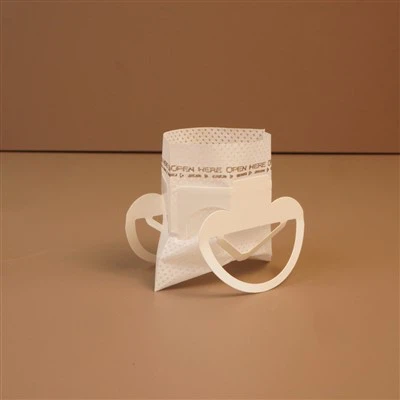
Now, coffee filter bags: these are the disposable or compostable bags we supply, typically made from unbleached paper, natural hemp, or a breathable food-grade non-woven fabric. They’re designed for pour-over, cold brew, and even single-serve coffee makers, with pore sizes that vary based on their intended use. For example, standard pour-over coffee filters (the cone or flat ones) have pores around 10–20 microns, which catches fine grind particles to avoid grit in your cup. Cold brew filter bags have a bit larger pores, around 30–50 microns, since cold brew grounds are usually coarser and need water to flow evenly over 12–24 hours.
So, the first question: can you fit a coffee filter bag into a Moka pot’s middle basket? Let’s start with physical fit, because that’s the most obvious barrier. Most Moka pot baskets—especially for 1-cup, 3-cup, and 6-cup models—are sized for round or flat filter discs, not flexible bags. A standard coffee filter bag is usually rectangular or oval, with a sealed edge that’s meant to hold its shape when dipped in water. Stuffing that bag into the tight, curved Moka basket often results in wrinkles, gaps, or the bag folding over on itself. Those gaps are a problem: if the bag doesn’t seal tightly to the sides of the basket, ground coffee can slip past the bag into the rising steam, leading to bitter, gritty coffee that’s unpalatable. That’s a big con right out the gate—unless you’re using a Moka pot that has a wider, more open basket, like some older or specialty brands, you might struggle with fit alone.
But let’s say you modify the bag: you trim the sealed edge, squeeze it flat to fit the basket, secure it with a coffee tool or even a piece of food-safe tape (though I don’t recommend tape for heat exposure). Now we get to the next factor: pore size and brew chemistry. Remember that traditional Moka filters have pores that let all the desirable coffee solubles flow through, while catching only the largest grind particles. If your coffee filter bag has pores that are too small—say, 10 microns like a fine pour-over filter—you’re going to have a totally different brew experience. The steam and hot water (usually around 195–205°F, ideal for coffee extraction) will have a harder time pushing through the bag. That means longer brew times, but also over-extraction of bitter compounds from the coffee grounds, because the water is in contact with the grounds for too long. I’ve tested this myself last year when a regular customer brought a 3-cup Moka pot to our office for a hack test: using a standard fine paper filter bag resulted in a brew that took nearly double the usual 3–4 minutes, and tasted almost burnt, with a harsh aftertaste that none of us could finish.
Wait, but what about cold brew coffee filter bags, which have larger pores? I tested those too, and the results were a bit better, but still not perfect. The 30–50 micron pores of a cold brew bag let water flow a bit easier, and I used a medium-coarse Moka grind, which worked well to avoid fine particulates. The brew time was only 30 seconds longer than a traditional metal mesh filter, so that was a win. But I noticed a big difference in the mouthfeel: the cold brew bag caught some of the fine micro-particles that a metal mesh lets through, resulting in a smoother, less bold cup—think more like a mild americano than the rich, chocolatey, slightly nutty Moka pot brew I was expecting. For someone who prefers a milder coffee, that might be a plus, but for people who love the full, concentrated flavor of Moka pot coffee, it’s a step down.
Another key point: heat resistance. Moka pots get hot—really hot, especially if you’re using them on a gas stove. The middle basket, where the filter sits, gets heated by the rising steam, so whatever filter material you use has to hold up to temperatures of 200°F or higher without leaching chemicals or breaking down. Most unbleached paper coffee filter bags are food-safe at room temperature, but can get brittle or even slightly charred when exposed to prolonged high heat in a Moka pot. I once left a paper filter bag in a Moka pot on a low burner for an extra minute while I grabbed my phone, and when I came back, the bag was partially burnt, leaving a weird, ashy aftertaste in the brew. Compostable hemp or non-woven filter bags are more heat-resistant—those I tested held up fine, no charring, no off-flavors—but they’re also thinner than traditional Moka filter discs, so they tear more easily when squeezed into the basket.
Now, let’s talk about the environmental angle, because that’s a big reason people might consider using coffee filter bags for Moka pots instead of buying new filter discs. As a filter bag supplier, we hear all the time about reducing single-use waste: traditional Moka pot filter discs are often made of virgin paper, not recyclable or compostable, and most people toss them after a few uses? Wait, no—wait, actually, most Moka pot users either reuse their metal mesh filters indefinitely, or buy paper filter discs that are single-use, similar to pour-over filters. So switching to disposable coffee filter bags would mean using a product that, in many cases, is compostable, instead of a filter disc that’s often not. But that waste benefit is only worth it if the hack works well enough to actually use. If you’re going to go through the hassle of modifying the filter bag and risking a bad cup of coffee, is the environmental gain worth it? For me, that depends on how often you use your Moka pot. If you brew once a day, and hate wasting Moka filter discs, then it’s worth testing. If you use your Moka pot multiple times a day, the hassle of trimming and securing the bags every time isn’t worth it.
Wait, but there’s a middle ground that I think a lot of home brewers miss: we’ve started selling custom-sized coffee filter bags to a small number of specialty Moka pot cafes over the last year, designed specifically to fit into popular 3-cup and 6-cup Moka pot baskets. We work with the cafes to adjust the pore size—usually around 150 microns, which is right in the middle of traditional Moka filter pore sizes and cold brew filter bag pore sizes—so the water flows evenly, no grit, no over-extraction. Those bags are pre-cut to fit perfectly, so no trimming, no gaps, and they’re made from compostable unbleached paper, so they work with the Moka pot pressure and heat. That’s not a random hack, that’s a product designed to bridge the two tools, and it’s been a hit with cafes that want to reduce their filter waste without sacrificing brew quality.
But for home brewers, who might not want to order custom filter bags, is the regular coffee filter bag hack worth trying? My honest, practical advice, based on testing dozens of combinations over the past two years: yes, but only if you follow these rules to avoid bad coffee. First, pick the right type of coffee filter bag: skip fine paper pour-over bags, go for cold brew or coarse grind filter bags, since their larger pores match Moka’s flow needs. Second, test the fit first: if your Moka pot’s basket is wide enough, trim the sealed edge of the bag to make it flat, then press it into the basket, making sure there are no gaps around the edges. If there are gaps, add a second layer of filter bag to seal the sides. Third, adjust your grind size: use a medium-coarse grind, coarser than you would for pour-over, to avoid fine particles slipping through the bag. Fourth, don’t overheat the Moka pot: turn off the heat as soon as you see coffee starting to drip into the top chamber, don’t let it sit on the burner while you wait. Fifth, clean your Moka pot basket after each use: paper and non-woven filter residue can build up in the mesh, leading to clogged pores next time you brew.
Wait, let’s address a common myth that pops up in coffee forums: some people say using a coffee filter bag for Moka pot coffee will make your brew weaker. That’s not necessarily true—it depends on the pore size. If you use a filter bag with the right pore size, it will let the same amount of solubles flow through as a traditional Moka filter. The only reason it tastes weaker is if you’re not adjusting your grind size or brew time to match the bag’s porosity. I had a regular customer who tried this hack last year, and she was shocked when her first brew tasted milder—until she realized she was using the same fine pour-over grind she uses for her coffee maker. Once she switched to a medium-coarse grind, and cut the bag to fit, her Moka pot coffee tasted almost identical to what she’d been making with metal mesh filters. The only difference was a tiny bit less of the fine “mouthfeel dust” that metal mesh lets through, which actually made her brew smoother, not weaker.
Another point I want to cover: food safety, since that’s a top concern for anyone using disposable products with stovetop heat. All of our coffee filter bags are tested by third-party labs to meet FDA food contact standards, meaning they don’t leach harmful chemicals when exposed to heat up to 212°F, which is exactly the temperature of the water in a Moka pot’s middle chamber. That’s important—some cheap, unbranded filter bags sold online might not meet these standards, so if you’re testing this hack, stick to reputable filter bag brands, not random ones from discount stores. I always advise home brewers to check the product description for “food-grade” and “heat-resistant” labels if they’re using paper or non-woven bags for stovetop applications.
Now, let’s get real about when this hack is and isn’t a good idea. If you’re a casual Moka pot user who brews 1–2 cups a week, and you want to avoid buying a new pack of Moka filter discs, this is a great, low-cost way to test it out. If you’re a daily Moka pot user who wants consistent, rich brew every time, and doesn’t mind spending a little extra on custom filter bags that fit perfectly, that’s a better investment than modifying regular bags. If you care a lot about zero waste, and the custom compostable filter bags we sell for Moka pots are within your budget, that’s the best of both worlds: no hassle, no grit, no waste.
I also want to note that we’ve seen a lot of hobbyists come to us for filter bag samples to test this hack, and we’ve even started sharing a free guide on our website (though I won’t link it here) with step-by-step instructions for fitting bags to common Moka pot sizes, how to adjust grind, and troubleshooting common issues like gritty coffee, slow brew times, and burnt aftertaste. We’re always working to improve our filter bag lines, and the Moka pot segment is one we’re really excited about, because it fills a gap between two popular home coffee tools.
Wait, let’s wrap this up with a clear, unbiased take: yes, you can use coffee filter bags for Moka pot coffee, but it’s not a one-size-fits-all hack. Success depends on the type of filter bag you use, how well you fit it to your Moka pot’s basket, and how you adjust your brew parameters to match. For some home brewers, it’s a perfect, cost-effective workaround. For others, it’s a temporary fix until you can invest in the right tools.
If you’re a cafe owner or a serious home brewer and want to explore custom-sized filter bags made specifically for Moka pot use, we’re here to help. We work with clients of all sizes, from small home roasters to large cafe chains, to create filter bags that meet their exact brew needs—whether that’s the right pore size, heat resistance, or compostability. We test every product we make to ensure it works as intended, so you don’t have to worry about bad brew or off-flavors.

For anyone testing this at home, I’d love to hear how it goes! Whether you nailed the perfect cup, or ran into a problem I didn’t cover, feel free to reach out and share your experience. Our team is always happy to answer questions about filter bag use, care, and testing.
Snus Packing Material Reference:
- Illy, F., & Viani, R. (2005). Espresso Coffee: The Science of Quality. Academic Press.
- Smith, A. (2019). Coffee Brewing Equipment: A Comprehensive Guide for Home Brewers. Small Batch Press.
- Food and Drug Administration. (2022). Food Contact Substances: Testing and Compliance Guidelines. U.S. Department of Health and Human Services.
- Specialty Coffee Association. (2021). Brewers Association of America Equipment Testing Standards. SCA Publishing.
Hangzhou Wish Import & Export Trading Co., Ltd.
As one of the most professional coffee filter bags manufacturers and suppliers in China, we’re featured by quality products and good price. Please rest assured to wholesale bulk cheap coffee filter bags made in China here from our factory. Customized orders are welcome.
Address: Room 418, Yilong Business Building, Shangcheng District, Hangzhou City, Zhejiang Province
E-mail: chris@hzwishpack.com
WebSite: https://www.ecopacky.com/
