If you’ve ever worked in a plastic packaging production plant, you know how wild the atmosphere can get—squeaky injection molding machines running full tilt, hot plastic fumes lingering in the air, and those bulky, heavy PET preform molds that look like they could crush a small car if you mess around with them. As a PET preform mold supplier, I’ve spent more than my fair share of time on plant floors, talking to operators who’ve dealt with everything from a stuck mold half that nearly took off a finger to a steam leak that burned their arm. Safety isn’t just a buzzword for us—it’s the stuff we drill into every new customer’s team because cutting corners here doesn’t just risk injuries; it ruins parts, costs downtime, and even damages the molds themselves. Let’s break down the real, no-BS safety precautions you actually need to follow, not the stuff you find buried in a 50-page manual no one reads. PET Preform Mold
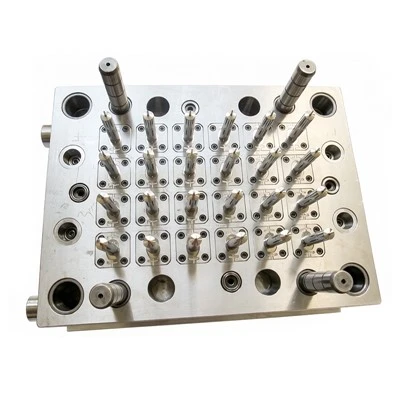
First off, let’s talk about the moment you’re moving the mold. These things weigh anywhere from 500 to 5,000 pounds, depending on if it’s for 10 preforms or 192 (yeah, we make the big ones too). I’ve seen way too many guys try to jostle a mold around with a forklift that’s only rated for 80% of its weight because they’re in a rush. That’s a disaster waiting to happen. The non-negotiable here is: always use a crane or forklift specifically rated for the mold’s full loaded weight, and double-check the lifting points. Every mold we ship has etched lifting lugs on it—don’t improvise with a random eye bolt or a chain wrapped around the edge of the mold plate. Last year, a customer of ours tried to skip using the crane’s spreader bar and slung a 3,000-pound mold with just two chains. The lugs bent mid-lift, the mold crashed into the floor, and they had to wait three weeks for us to repair it and pay a worker’s comp for a guy who tried to catch it. Don’t be that person. Also, never leave a suspended mold hanging over an operator’s station—even a 10-minute detour for a part change should mean lowering that thing to the ground, stat.
Next up: when you’re installing or removing the mold from the injection molding machine. This is another prime injury spot. The machine’s platens aren’t designed to catch a mold that slips, and they slam together hard enough to break mold cores or crush hands. Here’s the routine we’ve pushed on every client: first, always disconnect the machine’s power and lock it out—like, physically lock the control panel so no one can hit the cycle button while you’re working. I know it’s tedious, but I’ve seen machines trigger on their own from a stuck sensor. Next, make sure the mold’s alignment pins are clean before sliding it into the platens. If there’s any plastic buildup or rust on the pins, the mold can shift when the platens close, which is a big no-no for both safety and part quality. And when you’re tightening the mold’s clamping bolts, don’t just crank them as hard as you can—use a torque wrench and follow our spec sheet that comes with every mold. Over-tightening can warp the mold plate, which ruins preform alignment and leads to flash (that thin, annoying plastic extra on the preform) or, worse, a mold that can’t open all the way. Under-tightening? The mold can shift mid-cycle, and those hot plastic shots (we’re talking 280°F to 300°F for PET) will spray everywhere. Not fun for anyone.
Then comes the big one: working around the hot mold during production and maintenance. PET preform molds run at surface temps between 100°F and 150°F, and when you’re running cycles, the core pins and cavities get even hotter. I’ve had a new operator burn his wrist on a mold that “only” felt warm because he didn’t realize the core pins stick out far enough to brush your arm. So rule number one here: never reach into the closed mold while the machine is running. Even if you think the cycle is done, the machine’s sensor might be delayed. If you need to clear a stuck preform, wait until the mold is fully open and the machine has locked out power. We always tell clients to keep a pair of heat-resistant gloves right by the machine, not in a toolbox across the plant—no excuses. Also, watch the mold’s cooling lines. If there’s a leak, that’s hot steam or scalding water spraying out. A lot of plants ignore small leaks, but one of our customers had a cooling line rupture last year that sent steam into an operator’s face—he missed two weeks of work and the plant lost a whole shift of production. Inspect the cooling lines every shift, check the fittings, and replace any cracked hoses immediately. Pro tip: we wrap our molds in heat-shrinkable insulation tape when we ship them, but that’s for transit—remove all insulation before starting up. It can block heat dissipation, overheat the mold, and cause a fire (yes, even PET can burn if it’s heated hot enough for too long).
Maintenance and cleaning are where most accidents happen too. When you’re taking the mold apart to clean out built-up PET residue (called “dross”) or replace a broken core pin, you have to do it safely. First, again—lock out and tag out the machine. Don’t rely on the “emergency stop” button alone; the E-stop is there for emergencies, not routine work. When you’re disassembling the mold, keep all the small parts (core pins, ejector sleeves, retainer rings) organized. They’re tiny, easy to lose, and if you leave a core pin on the floor, someone is going to step on it and get a puncture wound. Also, never use a steel brush to clean the mold cavity—steel can scratch the polished surface (which ruins preform quality) and leave metal shavings that get embedded in the next mold you run. Use a brass brush or a non-abrasive plastic scraper instead. And when you’re heating the mold back up after cleaning, do it slowly—ramping up the temperature too fast can warp the mold plates or cause core pins to expand unevenly, which is a safety and quality issue.
Now, let’s talk about something a lot of people overlook: personal protective equipment (PPE) that’s actually suited for this job, not the generic stuff. First, heat-resistant gloves—we’ve seen operators use regular work gloves, and they get melted to the mold. Invest in gloves that are rated for temperatures over 500°F, not the $10 pair from the hardware store. Then, safety glasses with side shields—PET dross can fly when you’re cleaning, and a tiny piece of molten plastic in your eye is a nightmare. Some operators skip face shields, but when you’re taking a mold apart, those tiny parts can snap and hit your face, so face shields are a good call. Steel-toe boots are non-negotiable too—those 3,000-pound molds don’t care if you’re wearing sneakers. And for anyone working near the machine’s control panel, make sure you have closed-toe shoes so no loose parts fall into the electrical box. Also, if you’re a new operator, don’t be shy about asking questions. Every plant has those “veteran” operators who think they know everything, but mold tech changes all the time, and what worked 5 years ago might not be safe now. We train every new customer’s team for free, by the way—we’ll come out to your plant, walk through the molds, show you the right way to handle them, and answer any dumb questions you have (no judgment, we’ve all been there).
Wait, let’s not forget about daily pre-checks. You wouldn’t drive a car without checking the brakes, right? Same with a mold. Before every shift, have the operator do a quick walkaround: check the clamping bolts for tightness, inspect cooling lines for leaks, look for any bent or broken ejector pins, and make sure the mold’s vent channels aren’t clogged. Clogged vents are a big deal—they can cause pressure to build up inside the mold, leading to a mold split or a preform with defects, but also, that trapped pressure can send hot plastic flying when you open the mold. Last year, a customer skipped the pre-check, ran a shift, and a clogged vent caused a small explosion of molten plastic. No one got hurt, but the mold was ruined, and they lost 12 hours of production. That’s way more expensive than taking 5 minutes to check the vents.
Also, let’s chat about mold storage. A lot of plants just leave molds sitting on the plant floor when they’re not in use, which is stupid. If a mold is sitting idle, it needs to be stored in a locked, designated area, raised off the floor (so no water or oil gets on it, which causes rust) and covered with a protective sheet. We tell clients to never stack molds more than two high, because the bottom one can get crushed or the top one can fall over. We once had a customer stack three molds, the top one slid off, and it hit an operator who was walking by. He broke his arm, and they had to replace the mold that was crushed. Don’t do that. Label the storage area clearly too—make sure everyone knows that spot is for stored molds, not walking space.
Before I wrap this up, I need to be real with you: safety isn’t just about following rules. It’s about protecting your team, your equipment, and your bottom line. We’ve had customers who skipped safety steps to “save time” and ended up paying way more in downtime, repairs, and medical bills than if they’d just followed the simple rules I outlined here. At the end of the day, if you need help, whether it’s training for your team, checking your mold’s safety specs, or learning more about how to keep your PET preform molds running safe, we’re here to help. We’re not just a mold supplier—we’re partners who care about your team as much as we care about your production. If you’re looking to upgrade your existing molds or get new ones that are built with safety and performance in mind, reach out to our team to talk through your needs.
PET Preform Mold References
- Plastics Industry Association. (2022). Safety Guidelines for Injection Molding Equipment and Tooling.
- Occupational Safety and Health Administration (OSHA). (2021). Lockout/Tagout Standard for Manufacturing Facilities.
- Society of the Plastics Industry (SPI). (2020). Recommended Practices for Designing and Maintaining PET Preform Molds.
Taizhou Koni Mould Co., Ltd.
As one of the most professional pet preform mold manufacturers and suppliers in China, we also support customized service. Please feel free to wholesale high quality pet preform mold made in China here from our factory. For pricelist, contact us now.
Address: No. 97 Jinju Road, Chengjiang Subdistrict, Huangyan District, Taizhou City, Zhejiang Province
E-mail: kn@kenimould.com
WebSite: https://www.kenimouid.com/
