If you’ve ever found yourself stuck in a coffee shop with a dead laptop mid-work project, or camping in the woods when a sudden storm kills your camp’s only power source, you’ve probably wondered this: Can a solar power pack actually charge a laptop? As someone who’s spent the last seven years designing, testing, and selling portable solar power packs for a living—first in a tiny garage workshop, then as a small-scale supplier to outdoor brands and remote work teams—I’ve fielded this question hundreds of times. The short answer is yes, but it’s not as simple as plopping a solar pack on your windowsill and plugging in your MacBook mid-afternoon. It depends on a few key details most people don’t think about, and that’s exactly what I’m breaking down today, no overly technical jargon, just real-world experience from someone who’s watched customers make every mistake under the sun with their gear. Solar Power Pack
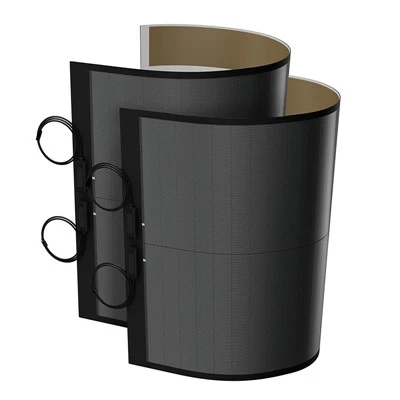
First, let’s get the basic science out of the way, and I’ll keep it as straightforward as I can. Laptops run on direct current (DC) power, just like almost all portable electronics, but most wall outlets deliver alternating current (AC) power. That’s why your laptop has that bulky charger brick, right? The brick converts AC from the wall to DC that your laptop’s battery can use. Solar power packs—ours included—store energy in built-in lithium-ion batteries (the same kind in your laptop, phone, and electric car), so they output DC power directly… but not always the right DC for your laptop. Some solar packs come with built-in AC inverters that flip the stored DC to AC, which lets you plug in your laptop charger just like you would at home. Others are “DC-only” and only offer output ports that match specific laptop models. That’s the first big split: what kind of output does your solar power pack have?
Let’s talk about capacity, because that’s the number most people fixate on, and it’s also the one most often misunderstood. Solar power pack capacity is measured in watt-hours (Wh), not just wattage or amps, and that’s a critical distinction. A standard 13-inch MacBook Air, for example, has a 58 Wh battery. If your solar power pack is rated for 100 Wh, that sounds like it should charge your MacBook almost twice, right? Well, not exactly. Because of energy loss—no solar conversion is 100% efficient, and converting between DC and AC eats up a little power too. A 100 Wh pack will actually deliver roughly 70 to 80 Wh of usable power to your laptop, so that MacBook Air would charge once, maybe a little less if you’re using it while charging, which pulls extra power. If you have a bigger laptop, like a 16-inch MacBook Pro with a 100 Wh battery, you’ll want a solar power pack with at least 150 Wh of usable capacity, not just the raw rated Wh, to get a full charge. I see customers all the time buy a tiny 50 Wh pack because it’s cheap, then get frustrated when it only tops their laptop up 30%—that’s just basic capacity math, and it’s one of the first things we walk them through when they reach out.
Next, how fast does your solar power pack charge a laptop? That depends on two things: the power output of the pack’s port, and the power draw of your laptop. Most newer laptops use USB-C, which can handle up to 100 watts of power for fast charging. If your solar power pack has a 100 W USB-C port, you can charge a compatible laptop in about the same time as a wall outlet—roughly an hour and a half for a MacBook Air, a little longer for a larger, higher-draw laptop. But if your pack only has a 25 W USB-C port, that same charge will take three or four times as long, and it might even not be fast enough to charge your laptop at all if you’re actively using it (like editing a video or browsing 10 tabs at once). Older laptops use barrel connectors, which only support up to 65 W on average, so you’ll want a pack with a matching barrel port or an adapter for your specific laptop model. Over the years, we’ve built adapters for dozens of laptop brands—Dell, Lenovo, HP, Microsoft Surface, and more—just to make it easy for customers to match their gear to our packs.
Now, the solar part, because this isn’t just a regular power pack—it’s a solar power pack, meaning it’s charged by the sun. That’s another point of confusion. If you’re planning to charge your laptop via the sun, not just use the pre-stored power in the pack, how long does that take? A standard 25-watt portable solar panel (the kind that comes with most mid-sized solar power packs) will deliver about 15 to 20 watts of actual usable power in direct, midday sun. Charge a 100 Wh laptop battery with that, and it will take roughly 5 to 6 hours. If you’re in partial sun—like under a tree, or on a cloudy day—you’re looking at half that, or even less. That’s why I always tell customers: if you’re using your solar pack for work on a hiking trip, charge the pack first in full sun in the morning, then use that stored power for your laptop throughout the day, instead of trying to charge the laptop directly from the sun while you work. It’s far more efficient, and it’s the trick every remote worker and outdoor guide I know uses. I tested this last summer when I was working from a backcountry campsite in the Rockies. I took our 150 Wh solar power pack and a 20 W solar panel, charged the pack for 4 hours in full sun, then used it to charge my 58 Wh MacBook Air twice over the course of two days, plus charge my phone and power a portable speaker. No campground, no plug, just sun. It worked perfectly, but I didn’t try to charge the laptop directly from the panel while I was using it—wait for the pack to store the power first.
But wait, are there limits? Of course. Solar power packs can’t charge gaming laptops, for example—those things have batteries that are 150 Wh or more, and they draw 150 W or even 200 W of power when in use. A standard solar power pack just doesn’t have the capacity or output to keep up with a gaming laptop, not without a much larger, heavier pack that’s not practical to carry around. Also, older laptops that use proprietary chargers from before USB-C was common—like some pre-2015 Dell Latitudes—might be harder to match with adapters, though most of those still work with our packs if you have the right barrel adapter. We keep a library of 40+ laptop adapters on hand for just that reason, and we’re always adding more when customers reach out with new models. Overcharging is another myth, by the way—all modern solar power packs have built-in battery management systems (BMS) that stop charging once your laptop is full, so you don’t have to worry about damaging your laptop’s battery by leaving it plugged in all day. That’s a feature we’ve built into every pack we sell, because I’ve heard way too many horror stories of customers ruining their laptop batteries by leaving them plugged into cheap, unregulated power packs.
I’ve learned most of this not from textbooks, believe it or not, but from customer mistakes and my own failed tests. Early in my business, I sold a 100 Wh solar pack to a graphic designer who wanted to work from a beach in Hawaii. She emailed me two weeks later, furious, saying the pack only charged her laptop 20% and was “broken.” I asked her a few questions, and found out she was trying to charge her 100 Wh MacBook Pro directly from the 25 W solar panel that came with the pack, while she was editing 4K videos. That laptop was drawing 85 W while in use, but the pack could only deliver 25 W from the panel at the time, so it was draining faster than it was charging. We swapped her for a 200 Wh pack with a 100 W USB-C port, and she emailed me a month later to say she’d charged her laptop three times over a week of beach work, no problem. That’s the stuff I deal with every day—real people with real problems, not just specs on a box.
Another common question: Can I charge my phone and laptop at the same time? Absolutely, as long as the solar power pack has enough ports and total wattage to handle both. Our mid-sized packs have two USB-C ports, two USB-A ports, and a 12V car port, so you can charge a laptop, a phone, a tablet, and even a camera battery all at once, no problem. Just make sure the total draw of all your devices doesn’t exceed the pack’s maximum output. For example, a 100 W USB-C port plus a 18 W USB-A port adds up to 118 W total, so if your pack’s maximum output is 120 W, you’re good. If it’s 100 W, you’d have to turn down the fast charging on one device to make it work. Again, that’s a detail we walk customers through every time they ask.
Let’s also talk about use cases, because “charging a laptop” means different things for different people. If you’re a digital nomad working from co-working spaces with sketchy power outlets, a small 100 Wh solar power pack is perfect for topping up your laptop between stops. If you’re a construction worker who needs to run a laptop for a full 8-hour shift on a site with no power, you’ll want a 300 Wh pack with a 150 W AC inverter, which can keep a laptop running for the entire workday. If you’re a family camping and want to let the kids watch movies on laptops at night, a 500 Wh pack will handle that, plus charge phones, lights, and a portable fridge. The key is matching the pack to your specific needs, not just buying the biggest one you can find, or the cheapest one you see online.
I’ve seen a lot of cheap solar power packs on Amazon that claim to charge laptops, but don’t list their usable capacity or actual output. Those are the ones that will leave you stranded when your laptop dies mid-meeting. All our packs, by contrast, list both raw rated Wh and usable Wh, so you know exactly how much power you can actually use. We also include a full compatibility guide on our website, broken down by laptop brand and model, so you can check before you buy if a pack will work for your gear. That level of transparency is something I built into this business from day one, after I sold a dud pack to a hiker who lost his entire weekend because it couldn’t charge his GPS and laptop. I never wanted that to happen again.
So, to circle back to the original question: Can a solar power pack charge a laptop? The answer is a resounding yes—if you pick the right pack for your laptop’s size, power needs, and your own use case, and you understand the limits of solar power (it works best for stored power, not just direct solar charging for high-draw devices). It’s not magic, it’s just proper planning, good gear, and a little real-world knowledge that most companies don’t bother to share.

If you’re ready to stop relying on wall outlets, campground hookups, or sketchy coffee shop power and get a reliable way to charge your laptop anywhere, let’s chat. Whether you need a small pack for day trips or a larger unit for remote work sites, we can help you find the right fit, no pushy sales pitches, just honest advice from someone who’s been in your shoes testing this gear in the field. Just reach out to start a conversation about what you need.
Solar Power Tile References:
- National Renewable Energy Laboratory. (2022). Portable Solar Power Systems for Remote Work Applications. U.S. Department of Energy.
- Consumer Technology Association. (2023). Portable Power Bank and Solar Pack Capacity and Efficiency Standards. CTA Industry Report.
- Laptop Battery Association. (2021). Lithium-Ion Laptop Battery Charging and Management Best Practices. LBA Technical Guide.
- International Electrotechnical Commission. (2022. IEC 62660: Safety of Portable Solar Power Storage Systems. IEC Standard.
R2R Green Energy Hi-Tech (Zibo) Co., Ltd.
We’re well-known as one of the leading solar power pack manufacturers and suppliers in China, also support customized service. With abundant experience, we warmly welcome you to wholesale bulk high quality solar power pack from our factory.
Address: Room 201, Building 1, Industrial Park, No. 1999 Minxiang Road, High-tech Zone, Zibo City, Shandong Province
E-mail: inquiry@r2rsolar.com
WebSite: https://www.r2rsolar.com/
