As a welding accessories supplier, I’ve lost count of how many times I’ve been asked this question in the shop, over phone calls, or in our chat support: “How often should I replace my welding tips?” The thing is, there’s no one-size-fits-all answer—any welder who’s been on a job for more than a week will tell you that. But after working with thousands of welders (from hobbyists in their garages to foreman on industrial construction sites), I’ve seen the patterns, the mistakes, and the small tweaks that make a huge difference. Let’s break this down, straight from the supplier’s side. Welding Accessories

First, let’s start with the basics: welding tips are tiny, unassuming parts, but they’re the heart of your MIG gun setup (we’ll stick to MIG for this post since it’s the most common for recreational and light industrial use, though TIG and stick have their own small consumables). Their job is simple: deliver the welding current to the contact tip, feed the wire through the correct diameter opening, and guide the shielding gas. But when they wear out, everything goes wrong. You get spatter buildup that clogs the tip, inconsistent wire feed, porosity in your welds, or even burnbacks that damage the whole gun. That’s why knowing when to swap them isn’t just a “good practice”—it’s how you keep your welds clean, safe, and on schedule.
Let’s get to the core: how often should you replace them? The short answer is every 4 to 8 hours of active welding. But that’s a range, and that range depends entirely on three things: how you use your gun, what material you’re welding, and how you maintain your tips between jobs. Let’s dive into each, because skimping on this is where most welders get tripped up.
First, usage frequency and intensity. A hobbyist who welds a few hours on weekends in their garage is going to have different needs than a shop foreman who’s on the job for 8 hours a day, five days a week. For the casual welder: if you’re welding 2 to 3 hours a week, your tip might last 2 to 3 months. But wait—don’t get comfy. Even if you’re only welding occasionally, if you notice spatter building up after just a few passes, or your wire starts feeding unevenly, that tip’s already past its prime. For the pro: a tip that’s on the gun for a full shift of heavy-duty work—like welding thick steel for a bridge or structural beam—will wear out in as little as 4 hours. I’ve seen shops where they swap tips every 2 hours on high-production runs, because constant heat and wire friction eat away at the tip’s interior.
Next, the material you’re welding. This is a huge variable most people miss. If you’re welding mild steel with solid wire, your tips will last a lot longer than if you’re welding aluminum, stainless steel, or using flux-cored wire. Here’s why: flux-cored wire produces way more spatter than solid wire, and that spatter sticks to the tip’s exterior and interior like glue. Aluminum, on the other hand, has a softer wire that can wear the inside of the tip faster over time because it’s more prone to “birdnesting” if the tip is misaligned or worn. I remember a customer who ran a farm shop welding aluminum fence posts all day—he was replacing tips every 5 hours, whereas another customer who only welded mild steel farm equipment swapped tips once a week. That’s the kind of gap you don’t see until you compare.
Then there’s maintenance, which is the biggest factor you can control. A lot of welders think “maintenance” means wiping the gun down once a month. No. For tips, it’s about cleaning them after every use, or every time you take a 10-minute break. We always recommend using a tip cleaner (the wire brush type, not the abrasive kind that scratches the tip) to scrape off spatter buildup inside and outside the tip. If you let spatter harden, it will gradually clog the tip’s opening, restrict gas flow, and cause wire to bend as it feeds through, leading to defects. I’ve seen welders stretch a tip to 12 hours of use just because they took 2 minutes at the end of each shift to clean it—while another welder, using the same gun, same material, burned through 6 tips a week because he skipped cleaning. That’s 5 extra tips a month, which adds up fast, not to mention bad welds that require rework.
Now, let’s talk about the warning signs that your tip needs replacing right now, no matter how many hours you’ve put on it. This is the part that’ll save you from a bad job. First, spatter buildup that won’t come off with a tip cleaner. If you’ve scrubbed it and there’s still hard black or brown spatter on the inside, that’s blocking gas flow and causing porosity. Second, inconsistent wire feed. If your wire is sticking, skipping, or birdnests (tangling) inside the gun, that’s almost always a worn tip— the interior opening gets misshapen from heat and friction, so the wire can’t feed smoothly. Third, burnbacks. That’s when the flame goes back into the gun, usually because the tip is too clogged or the opening is too big. Burnbacks don’t just damage the tip—they can ruin the whole MIG gun, so swapping tips before that happens is non-negotiable. Fourth, uneven weld beads. If your beads are spiky, have gaps, or look messy when they used to be smooth, check the tip first. 9 times out of 10, that’s a worn or clogged tip causing the current and gas to be inconsistent.
Wait a second—what about myth-busting? I hear so many wrong ideas from welders, so let’s knock them down. First myth: “I’ll wait until the tip breaks to replace it.” No, by the time it breaks, you’ve probably already ruined a part of your gun, wasted wire, and had to redo welds. Second myth: “Expensive tips last longer.” Sort of, but not just because of the price. A high-quality tip made from hard brass or copper alloy will resist wear and heat better than a cheap, thin tip, but even the best tip will wear out if you don’t maintain it. We have customers who swear by our heavy-duty tips for high-production work, and they get 2x the life of the generic tips they used to buy, but they still replace them on schedule. Third myth: “All tips are the same size, so I can reuse any tip.” No—using the wrong diameter tip for your wire (like a 0.035” tip for 0.045” wire) will cause constant friction, lead to birdnests, and wear the tip way faster. Always match your tip size to your wire size.
Now, let’s tie this back to being a supplier, because I don’t want to just give you rules— I want to give you actionable steps that work for your specific setup. If you’re a hobbyist: keep a log (it doesn’t have to be fancy—just a note in your phone) of how many hours you weld, and check your tip after every job. If you’re a small shop: set a schedule to swap tips once a week, but adjust based on material—if you run flux-cored 5 days a week, swap every 5 days. If you’re a large production site: train your crew to swap tips every 4 to 6 hours, and keep extra tips on hand at all times (we can ship bulk orders same-day, by the way).
Wait, another thing: environmental factors. If you’re welding outdoors in windy conditions, that extra wind can blow shielding gas away, so you might notice tip wear happening faster because you’re running more current to compensate. If you’re welding in a dusty environment, dust can get into the tip’s opening, causing clogs. I had a customer who welded on construction sites in the desert—sand would get into his gun, and he was replacing tips 2 hours faster than the shop doing indoor welding. So environment matters too, and that’s an easy adjustment to your tip replacement schedule.
Let me give you a real example, something that happened just last month. A local contractor came in panicking because he had 10 structural beams to weld for a new building, and his tips were failing every 3 hours. He was using generic tips, running flux-cored wire, and only cleaning his tips once a day. We sat down with him, showed him how to clean the tips with a proper tip cleaner every two hours, and suggested our heavy-duty brass tips that are designed for high-spatter environments. He tried it, and those same tips lasted 8 hours each. That’s a huge difference—less downtime, fewer reworks, and he didn’t have to rush to the shop for new tips mid-job. It’s little things like that that make all the difference.
Now, let’s address the elephant in the room: cost. Welding tips are cheap, right? A pack of 10 tips is like $10 to $15. But when you factor in downtime, rework, damaged gun parts, and safety risks, a $15 pack of tips is the cheapest part of your whole setup. I’ve seen a welder skip a tip replacement, get a burnback, and have to replace their entire MIG gun for $300, plus 4 hours of downtime on a $1,000-a-day job. That’s way more than the cost of a few extra tips. So think of replacing tips as an investment, not an expense.
Wait, what about TIG and stick welding, since I mentioned them earlier? For TIG, the consumables are tungsten electrodes and cup liners. Tungsten should be replaced when it’s contaminated (looks pitted or dirty) or if you’re getting inconsistent arcs—usually every 8 to 16 hours of use, depending on the material. For stick welding, the electrode holder’s contact parts might need replacing when they get worn, usually every 20 to 30 electrodes, but that’s less frequent than MIG tips. But most of what we talk about applies to consumables across the board—check for warning signs, maintain between uses, replace before problems happen.
Let’s wrap this up with a clear, actionable plan you can use tomorrow. First: for MIG welding, your baseline is 4 to 8 hours of active use, adjust based on material (flux-cored = 4-6 hours, aluminum = 5-7 hours, mild steel = 6-8 hours). Second: clean your tip after every use with a proper tip cleaner, no abrasive tools. Third: watch for warning signs—spatter you can’t remove, inconsistent wire feed, burnbacks, messy welds. Fourth: use the right size tip for your wire, and invest in higher-quality tips if you’re using your gun a lot. Fifth: keep extra tips on hand so you never have to wait for a replacement mid-job.
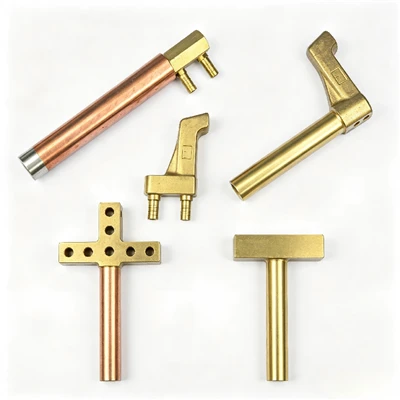
At the end of the day, welding is all about consistency, and your tips are a big part of that. A good tip can make a beginner’s weld look clean, and a worn tip can make an experienced welder’s work look sloppy. If you’re not sure about your current tip setup, or you want to find the right tips for your specific welding style, we’re here to help. Don’t hesitate to reach out to our team to discuss your needs, whether you’re a hobbyist buying a pack for your garage or a large shop needing bulk orders for daily use.
Induction Heating Machine References:
- Welding Consumables Best Practices, American Welding Society, 2021
- MIG Gun Maintenance Guide, Miller Electric Mfg. LLC, 2022
- Consumable Wear Factors for FCAW and GMAW Processes, Lincoln Electric, 2020
- Welding Safety and Efficiency: Consumable Replacement Schedules, International Association of Welders, 2023
Dongguan Huineng Welding Equipment Co., Ltd.
We are one of the most experienced welding accessories manufacturers and suppliers in China. With a professional production team, we offer a wide range of products with superior quality. Please feel free to buy customized welding accessories at competitive price from our factory.
Address: 530 Guantai Road, Xitou Village, Houjie Town, Dongguan City, Guangdong Province
E-mail: fengshanggang75@126.com
WebSite: https://www.huinengwelder.com/
