A few months ago, I sat across from an industrial facility maintenance manager in the Midwest, and we were talking through their biggest ongoing headache: replacing water hose reels every 12 to 18 months. Their old reels, the ones they’d bought from generic big-box suppliers, wouldn’t hold up to repeated use with high-pressure hot water, harsh cleaning chemicals, or the constant tug of dragging 100-foot hoses across concrete floors. “We don’t have time for reels that break mid-shift,” he said. “But I also can’t justify spending a fortune on something that’s overkill for our needs.” That conversation is what got me thinking about a question I get almost every week as a water hose reels supplier: Are there water hose reels actually built for industrial use? The short answer is yes—but not every reel marketed as “industrial” is. The line between commercial-grade and truly industrial is thinner than you’d think, and sorting through the noise is where most buyers go wrong. Water Hose Reels

Let’s start with what makes a reel industrial, not just a buzzword for industrial use. Commercial reels are fine for things like a landscaping business’s weekly irrigation or a small auto shop’s occasional hose use. They’re usually made of thinner steel, have basic internal parts, and are rated for lower pressure and temperature. Industrial reels, on the other hand, have to withstand 10+ years of continuous, heavy use in environments that are far from gentle—think manufacturing plants, food processing facilities, mining sites, agricultural operations, and large-scale construction. For these settings, a reel that fails isn’t just an inconvenience; it’s a safety hazard, a production delay, and an unnecessary cost.
Take internal components, for example. A commercial reel might use a standard spring that’s coated in basic paint to prevent rust. An industrial reel? We use tempered steel springs that are stress-tested to cycle tens of thousands of times without losing tension. The springs are often encased in a sealed, lubricated housing to keep out dust, debris, and moisture—two things you see constantly in industrial facilities. Then there’s the swivel, the part that connects the hose to the reel and keeps the water flowing without twisting. Commercial swivels are usually made of cast zinc, which works for light use but will leak or seize up after a year under high pressure or chemical exposure. Industrial swivels are machined from solid brass or forged steel, with precision seals that resist corrosion and hold up to pressures up to 500 PSI (and even higher for specialty applications like pressure washing).
Hose compatibility is another big factor. Industrial use often means hoses that are thicker, heavier, and rated for harsher conditions—hot water up to 180°F, caustic cleaning agents, or abrasive materials like concrete slurry. A commercial reel might only be designed for ½-inch or ¾-inch light-duty rubber hoses, but an industrial reel needs to handle 1-inch or even 2-inch heavy-duty hoses, and still retract smoothly without binding. That requires a larger diameter drum, a sturdier frame, and the right ratio on the retraction spring to balance the extra weight of a thick, reinforced hose. We learned this firsthand a few years back when a grain processing plant came to us after their generic reel failed with a 1¼-inch hose used to wash grain trucks. The thin frame bent under the combined weight of the hose and water pressure, and the drum cracked within six months. Replacing it with our heavy-duty industrial reel, which has a 3/16-inch steel frame and a double-walled drum, solved that problem entirely. They haven’t had to replace a reel in over three years.
Environment-specific design is where industrial reels really set themselves apart. Not all industrial settings are the same, so a one-size-fits-all approach rarely works. For example, food and beverage processing facilities have strict sanitary requirements—no crevices where bacteria can hide, resistance to food-grade detergents, and often no exposed metal parts that could flake off into product. We make a line of stainless steel industrial reels for this exact use, with seamless welds and smooth surfaces that are easy to wipe down and sanitize. They’re rated for use with hot water and food-safe chemicals, and they pass all the industry standards for hygiene.
For mining or construction sites, on the other hand, dust and rough handling are the main enemies. Those reels need to be rated for impact, with lockable mechanisms that keep the hose secure when it’s dragged across uneven terrain, and they have to resist corrosion from exposure to mud, rain, and chemicals used to treat roads or concrete. We have a heavy-duty construction-grade reel that’s been tested to survive a 10-foot drop onto concrete without cracking the frame—something no commercial reel would come close to handling. Even agricultural operations, which often get lumped in with general industrial, have unique needs: reels mounted on tractors or farm equipment that need to pivot, or wall-mounted reels in milking parlors that need to resist sanitizing chemicals and livestock-related grime.
But here’s the thing: industrial reels aren’t just for heavy-duty applications. A small industrial shop that uses a reel for parts washing, or a warehouse that uses it for cleaning loading docks, doesn’t need a reel rated for 500 PSI, but they do need one that’s reliable enough to use every day without breaking. That’s why we carry a range of industrial grades, from light industrial for smaller operations all the way up to heavy industrial for high-demand sites. The key is matching the reel’s specifications to the actual use case, not just buying the most expensive one on the shelf.
I’ve seen too many buyers make the mistake of assuming any “industrial” reel is the best fit for their needs, only to end up with a product that either underperforms or costs way more than it should. A few years ago, a small manufacturing facility with 50 employees came to us after spending $1,200 on a “heavy industrial” reel from a big box industrial supplier for their parts washing station. It was overkill—rated for 500 PSI, which was twice the pressure their parts washing system used—and it was way bulkier than they needed. They ended up trading it in for our light industrial reel, priced at $450, that was rated for 250 PSI, fit their smaller hose, and worked perfectly for their daily use. They saved more than 60% on the cost and haven’t had any issues in two years.
So, how do you actually pick the right industrial water hose reel? It starts with asking the right questions, not just looking for a label. First, what’s the maximum pressure and temperature of the water or chemicals you’ll be using? Second, what’s the diameter and length of the hose you’ll be pairing with the reel? Third, what’s the environment like—dust, moisture, chemicals, impact? Fourth, how often will you be using the reel? Is it 10 times a day, 100 times a day, or somewhere in between?
These questions lead you to the right specs, and that’s where a reputable supplier comes in. As someone who’s been in this business for over a decade, I can tell you that the best industrial reels aren’t about flashy marketing. They’re about attention to detail: using the right materials, testing every component, and designing for real-world use. We test every reel we sell with thousands of retraction cycles, check for leaks at every connection, and make sure the frame is sturdy enough to handle the conditions it’s built for. We also offer customization options—mounting brackets, hose guides, special seals for specific chemicals, even reels made from different materials for unique environments.
I know a lot of maintenance managers and facility owners are dealing with tight budgets, and that’s why we design our industrial reels to last. The initial cost is higher than a commercial reel, but when you factor in replacement costs, downtime, and labor to install new reels every year, an industrial reel pays for itself in 12 to 24 months. That’s the math that matters, not just the upfront price.
At the end of the day, the question isn’t just whether there are industrial water hose reels that work—it’s whether there are ones that work for your specific operation. A reel that’s built to handle a 24/7 mining site’s high-pressure hose drag will be overkill for a small auto shop’s occasional use, but a light industrial reel built for that auto shop will save money and last longer than a generic commercial reel.
If you’re in the market for a water hose reel for industrial use, don’t settle for a product that’s marketed as “industrial” without digging into the specs. Ask about the materials used for the swivel, spring, and frame. Ask about their testing process. Ask if they’ve worked with operations similar to yours. As a supplier, that’s what we pride ourselves on—matching the right reel to the right customer, not just making a sale.
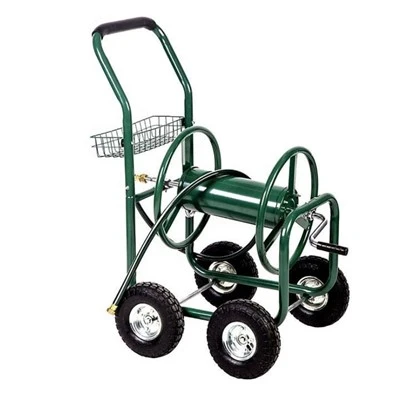
If you’re tired of dealing with reels that break mid-shift, leak constantly, or cost more in replacements than they should, reach out to us. We’ll walk through your needs, break down the options, and help you find a water hose reel that’s built for your industrial use, no overkill, no unnecessary costs, just reliable performance that keeps your operations running smoothly.
Garden Hose Carts References
- National Association of Chemical Distributors. (2021). Industrial Equipment Standards for Corrosion Resistance. NACD Technical Report Series.
- Occupational Safety and Health Administration. (2022). Facility Maintenance and Tool Safety Guidelines for Industrial Workplaces. OSHA Publication 3512-12R.
- American Society of Mechanical Engineers. (2020). Standard for Hose Reels for Industrial Use (ASME B107.6-2020).
- Food and Drug Administration. (2021). Sanitation Standards for Food Processing Equipment: Reel Design Requirements. FDA Food Code Annex 7.
Yongkang Fengding Industry & Trade Co., Ltd.
Yongkang Fengding Industry & Trade Co., Ltd. is one of the most professional water hose reels manufacturers and suppliers in China, also supports customized service. Please feel free to buy advanced water hose reels made in China here from our factory. Quality products and reasonable price are available.
Address: No.96 Lixin Road, Houren Village, Shizhu Town, Yongkang City, Jinhua City, ZhejiangProvince, 321300, China
E-mail: Cecilia@fdgmtool.com
WebSite: https://www.fdgmtool.com/
