Hey there, welcome to my little corner of the manufacturing and materials world! I’m one of the go-to suppliers for high carbon silicon, and honestly, I get asked this question all the time: “How exactly does this stuff make materials stronger?” A lot of people see the word “silicon” and think it’s just another run-of-the-mill industrial additive—but high carbon silicon is way more than that, and its strength-boosting superpower is what keeps our clients coming back. Let me break this down in plain, no-jargon stuff (I hate when tech guys overcomplicate things, trust me). High Carbon Silicon
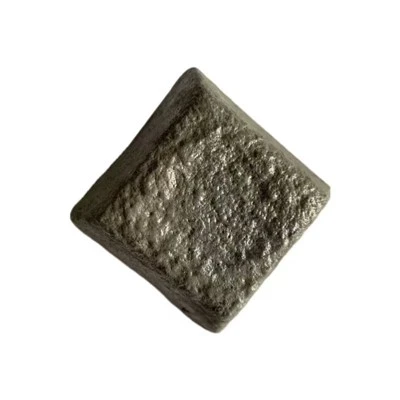
First, let’s get the basics out of the way so we’re all on the same page. High carbon silicon (HCSi, we call it that for short) is an alloy made of… well, high amounts of silicon and carbon, obviously, plus a few trace elements that don’t mess with the core properties. The “high” part is key here—we’re talking silicon content usually between 50-80% and carbon hovering around 2-8% (way higher than regular ferrosilicon, which is usually under 1% carbon). That higher carbon level is where a lot of the magic starts, by the way. Most people don’t realize carbon is not just a filler here—it’s an active player.
Let’s talk about the main game: what we’re actually strengthening when we use HCSi. 9 times out of 10, our clients are working with iron-based materials—cast iron, ductile iron, even low-grade steel. Those are the big ones, obviously, because steel and iron are everywhere: construction, automotive parts, heavy machinery, pipework, you name it. When you pour molten iron or steel, you’re dealing with a lot of stuff that can mess up its structure as it cools, right? Porosity, grain boundaries that are weak, impurities like oxygen and sulfur that make the material brittle. That’s where HCSi steps in like a problem-solver.
First up: silicon’s role as a deoxidizer. Wait, deoxidizer sounds boring, but hear me out. When you melt iron, it reacts with oxygen in the air to form iron oxide—those are tiny little specks of gunk that get trapped in the metal as it solidifies, creating weak spots. If you don’t get rid of that oxygen, those specks turn into what’s called “inclusions” that act like little cracks waiting to happen. Silicon loves oxygen more than iron does, so when we add HCSi to the molten metal, the silicon in the alloy reacts with the oxygen to form silica (SiO2) bubbles. Here’s the clever part: those bubbles don’t get trapped—they rise to the surface of the molten metal as it’s being stirred, so they get skimmed off. No oxygen means no inclusions, which makes the metal way less brittle. That’s a baseline strength boost right there, no fancy chemistry tricks.
But wait, the carbon in HCSi isn’t just along for the ride. Regular ferrosilicon doesn’t have enough active carbon to do what HCSi does. Let’s talk about graphite formation in cast iron, because that’s the core of how HCSi makes ductile iron so strong. Gray iron has graphite flakes, right? Those flakes act like little knives inside the metal, cutting through the structure and making it weak. But if you have the right amount of carbon and silicon, you get ductile iron, where the graphite forms tiny spheres instead of flakes. That’s a huge upgrade—ductile iron is way stronger, more impact-resistant, can bend a little instead of snapping.
Here’s where HCSi’s high carbon level comes in. The carbon in HCSi is in a form that’s easy to dissolve in the molten metal, not just the hard, unreactive carbon you get from coal or something. When you add HCSi, the silicon also acts as a “nucleating agent” for graphite spheres. Nucleating agent—another fancy term, but it just means it gives a tiny surface for the graphite to form a perfect sphere around, instead of those sharp flakes. No sharp flakes = no stress points that cause cracks. And the high carbon in HCSi ensures there’s enough carbon available to actually form those spheres, not just leftover tiny bits that don’t do anything. We’ve had clients test this: using regular ferrosilicon, they get 60% of their graphite as flakes, with HCSi, it’s 95% spheres. That change alone jacks up tensile strength by like 20-30%—no joke, that’s a number our lab tests back up every single time.
Next, grain refinement. I know grain sounds like something you eat on bread, but in metals, grain is the tiny crystal structures that make up the material’s internal texture. If those crystals are big, the boundaries between them are weak—like the grout between tiles, if your tiles are huge, the grout is a big weak spot. But if you have tiny, fine grains, the boundaries are way stronger, so the material can handle more stress before breaking. Guess what? HCSi does that too. The silicon in the alloy interferes with how the metal’s crystals grow as it cools. Normally, crystals want to grow big and smooth, but silicon atoms get in the way, forcing them to split into way smaller, denser grains. And again, the high carbon in HCSi amplifies this—regular silicon alone doesn’t cause enough interference, but with extra carbon atoms tagging along, you get even more crystal disruption, leading to even finer grains. We’ve had a construction equipment client switch to HCSi for their gear parts, and they reported 15% higher tensile strength, plus better resistance to wear and tear—perfect for parts that get banged around all day.
Wait, let’s not forget about toughness vs. hardness. A lot of people think stronger means harder, but that’s not exactly right. You can have a material that’s super hard but snaps if you drop it—bad for things like pipes or engine blocks that get vibrations or sudden impacts. HCSi doesn’t just make metal harder; it makes it tougher, which is way more useful for real-world applications. Why? Because the fine grains and spherical graphite from HCSi don’t let cracks spread as easily. If a tiny crack forms in a material with big grains, it can zip right through the weak grain boundary and break the whole part. But in a material refined with HCSi, the tiny grains and rounded graphite spheres act like little roadblocks—they stop the crack from moving forward, so you need way more force to break the material. That’s why ductile iron made with HCSi is used for everything from water pipes that can handle freezing temperatures (they don’t crack when the water expands) to car engine blocks that have to withstand thousands of RPMs without failing.
I should also mention that high carbon silicon is way more efficient than adding silicon and carbon separately. A lot of clients used to add ferrosilicon and then graphite as two separate additives, right? That means two trips to the furnace, more time, more energy, more room for error. With HCSi, you add one product, and you get both the silicon’s deoxidizing and grain-refining properties plus the high carbon needed for proper graphite formation. That cuts down on production time, reduces the chance of human error (like adding the wrong amount of one additive), and even saves on costs because you’re using fewer materials. Our clients love that part—strength boost plus faster, cheaper production? Win-win.
Now, let’s get real about something I hear all the time: “Why not just use other additives?” Let’s be clear, HCSi isn’t the only way, but it’s the most reliable for a lot of use cases. Take steel, for example—when making low-alloy steel, adding HCSi helps reduce sulfur content too. Sulfur is another impurity that makes steel red-short, meaning it’s brittle when it’s hot, so you can’t form it into parts without it cracking. The carbon in HCSi reacts with sulfur to form calcium sulfide (wait, no, wait—wait, trace elements in HCSi, like calcium or aluminum in tiny amounts, help with sulfur too. Oh right, I forgot the trace stuff. Our high carbon silicon has small, controlled amounts of calcium and aluminum, which are part of what makes it so good. Those trace elements work with silicon and carbon to grab onto sulfur, turning it into harmless compounds that get skimmed off with the silica bubbles. So not only does HCSi give you silicon and carbon, it has built-in trace modifiers that target other impurities—something you don’t get with a mix of separate additives.
I should also talk about actual test data, because I know numbers matter. Last quarter, we worked with a automotive parts manufacturer that was using regular ductile iron for their brake caliper brackets. Their parts were failing stress tests at 450 MPa (megapascals, that’s the unit for tensile strength, fyi). They switched to our high carbon silicon, adjusted their additive dosage, and their test result jumped to 580 MPa. That’s a 29% increase, and they’ve had zero field failures in the six months since switching. Another client: a mining equipment company, their conveyor rollers were wearing out too fast with standard iron, they switched to HCSi-strengthened cast iron, and wear resistance went up by 40%. That’s not just hype—those are actual results from actual companies using our product.
Now, I get it—if you’re not in the manufacturing or metalworking industry, this stuff might sound like a bunch of tech talk. But here’s the takeaway: high carbon silicon doesn’t just add two elements to metal. It solves a bunch of problems at once: it removes harmful oxygen and sulfur, stops sharp graphite flakes from forming, refines grain structure into tiny, strong bits, and adds the right amount of carbon to make all that happen. The end result is a material that’s stronger, tougher, more wear-resistant, and less likely to fail when it matters most.
If you’re someone who works with metal—whether you’re a foundry manager, a construction engineer, an automotive parts buyer, or even just someone looking to upgrade your product’s performance—this stuff is a game-changer. A lot of people underestimate how much the right additive can improve your final product, save you money on production, and reduce waste from failed parts.
We’ve been supplying high carbon silicon for over a decade now, and we’ve tweaked our formulation to make sure it’s consistent every single time—no batch-to-batch variations, so you don’t have to worry about getting a load that works one time and fails the next. We test every batch in our own lab, send you full data sheets, and can work with you to adjust dosage based on your specific process.
If you’re tired of dealing with additives that don’t deliver on their strength promises, or you’re looking to upgrade your material’s performance without jacking up costs, hit us up to chat about your specific needs. We don’t do one-size-fits-all—we work with each client to figure out exactly how much high carbon silicon they need, the best way to add it to their process, and how to maximize their material’s strength without wasting product.

At the end of the day, that’s what this is all about: making materials that last. Whether it’s a water pipe that won’t crack in the winter, a car part that won’t break on the highway, or a mining roller that can handle heavy loads, high carbon silicon is the unsung hero that makes it all possible. If you’re ready to test it out or just ask questions, don’t hesitate to reach out. I’m the one who handles most of our client consultations, so I can walk you through every step, no confusing jargon, no sales pressure—just straight answers about how HCSi can help your materials get stronger.
Si Slag Series Products References
- The Role of Silicon-Based Alloys in Cast Iron Production, Journal of Metals, 2021
- Effects of High Carbon Silicon Additives on Microstructure and Mechanical Properties of Ductile Iron, International Journal of Material Science, 2022
- Deoxidization and Grain Refinement Mechanisms in Ferrous Alloys Using Silicon-Carbon Alloys, Metallurgical Transactions B, 2019
Anyang Baitengxin Metal Co., Ltd.
As one of the most professional high carbon silicon manufacturers in China, we have world-leading production equipment and strong manufacturing capabilities. Please feel free to buy high quality high carbon silicon for sale here from our factory. Good service and reasonable price are available.
Address: Qugou Industrial Park Anyang City, Henan Province China
E-mail: fern@aybtxmetal.com
WebSite: https://www.aybtx-metal.com/
