If you’re an engineer, product designer, or startup founder bringing a new electronic device to market, one of the first big questions you’ll face is: How much will plastic injection molding cost for my parts? I’ve been on the supply side of this for 12 years, running a plastics injection molding shop that focuses exclusively on electronic components, casings, and internal subassemblies. I’ve worked with teams that nailed their cost estimates on the first try and teams that budgeted half of what their final, production-ready cost ended up being, and the difference always comes down to how well you understand the variables that go into our pricing. This isn’t a guesswork business—every number we quote is tied to concrete details about your part, your volume, and your timeline, and I’m breaking down exactly how we (and reputable injection molding suppliers like us) arrive at that figure, so you can estimate it accurately before you reach out for a formal quote. Plastic Injection Molding for Electronics
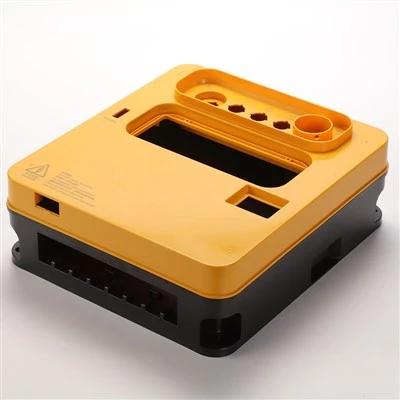
First, let’s start with the foundation: your part’s design, because it’s the single biggest driver of molding costs for electronics. Electronic parts have unique constraints—they need to fit circuit boards, connect to cables, accommodate sensors, or blend into a sleek device casing—and those features add layers of cost you might not account for at first. Let’s take a common example: a custom smartphone battery cover vs. a simple, flat plastic frame for a wireless earbud. The battery cover has snap-fit latches, camera cutouts with precise beveling, and a subtle texture to match the device’s finish. That means the mold for that part will have undercuts (areas where the plastic sticks to the mold side you can’t just pull straight out) instead of being a basic two-piece mold. Undercuts require side actions—little metal sliders or lifters that move perpendicular to the main mold halves—and each side action adds 20% to 50% to the mold cost, plus adds cycle time to every part you produce. For electronics, things like wall thickness also matter more than most people realize: if a part has uneven wall thickness (thicker in one spot, thinner in another), it will cause sink marks (shallow dents on the part’s surface) or warping, which means we have to slow down injection speed, adjust cooling, or even re-machine the mold mid-production to fix it. For a sensor housing, uneven walls could also lead to gaps that let dust or moisture in, which is a product failure risk we have to bake into our pricing too. I always tell my clients: if your part design has undercuts, tight tolerances (like ±0.005mm for a connector pin holder), or features electronic-specific requirements like ESD (electrostatic discharge) resistance, don’t underestimate how much those will lift your mold and part costs.
Next up: the material you choose for your plastic part. This is another area where electronics have special needs, and it’s not just a choice of color or finish. For most electronic internal parts, we use engineering-grade plastics—ABS, polycarbonate (PC), PC/ABS blends, nylon, or specialty materials like liquid crystal polymer (LCP) for high-heat applications. For outer casings that need ESD protection, we work with filled plastics (carbon fiber or glass filler) that conduct static charge to prevent damage to circuit boards. Each of these materials has a different cost per pound, and also different processing requirements that impact production time. For example, LCP has a very high melting point, so it requires hotter mold temperatures and longer cycle times than ABS, which means more energy use per part. ESD-safe materials often need slower injection rates to avoid heating and degrading the conductive filler, so that adds more time per part too. On top of the base material cost, if you need a custom color, UV resistance, or a specific finish (matte, glossy, soft-touch), that will add 5% to 15% per pound on top of the base material price. I once had a startup come to us asking for a quote for a simple button for their smart thermostat, and they picked a clear polypropylene without checking the material specs—they didn’t realize clear plastics require more precise mold polishing and can show every tiny surface defect, so they ended up paying 10% more per part than if they’d chosen a standard opaque ABS. That’s a small example, but it shows how material choice directly ties to cost.
Then there’s volume, which is non-negotiable for injection molding pricing. Injection molding is a high-volume process, so the more parts you order, the lower the per-part cost—this is called the economies of scale, and it’s the most important factor for you to understand if you’re estimating. Let’s break this down: if you need 1,000 parts total, we’re going to quote a different price than if you need 100,000. Why? Because the biggest upfront cost isn’t the labor per part—it’s the mold tooling. A basic two-cavity mold (a mold that makes two parts every cycle) costs roughly $3,000 to $8,000 for a small electronic part; a six-cavity mold for the same part is $6,000 to $15,000. If you only need 1,000 parts, we have to spread that $5,000 mold cost over 1,000 parts, so that adds $5 per part to the total, even if the part itself only costs $0.50 to produce. If you need 100,000 parts, that same $5,000 mold cost becomes $0.05 per part, so your per-part cost drops to $0.55. That’s a huge difference, and it’s why so many low-volume projects get stuck at inflated prices—they don’t realize that waiting to ramp up volume until they have confirmed product demand will lower their total cost over time. For electronics, which often go from prototype to full production in 12 to 18 months, this is especially relevant: if you’re only making 500 prototype units for testing, we’ll quote a low-volume (also called pilot run) price that includes higher per-part fees for shorter runs, but once you lock in a 50,000+ part order, we can drop that per-part cost by 60% or more. I always advise clients to plan for both a low-volume pilot run and a projected full production volume when estimating, because if you only plan for the pilot, you might underestimate what you’ll pay when you go to scale.
Now, let’s talk about the hidden costs that most people forget when estimating, and these are the ones that can make your final total jump 20% to 40% if you don’t account for them. First, secondary operations. Most electronic parts don’t come out of the mold ready to use. You might need to assemble multiple plastic parts together (ultrasonic welding, adhesive bonding), insert metal pins or screws into the mold (overmolding inserts, which requires specialized tooling to ensure the insert stays in place during injection), or add surface treatments like plating, painting, or laser engraving for logos. Plating, for example, is a common requirement for connector housings or decorative casings, and it can add $0.20 to $0.50 per part—way more than just the plastic cost. Another hidden cost is tooling modifications. If you send us a part design that has a tiny flaw that causes 10% of parts to be defective, we might quote a cheaper base mold, but then you’ll have to pay for mold repairs or re-machining once you start production. For electronics, we also have testing and validation costs: many clients require parts to be tested for dimensional accuracy, ESD performance, or durability before they can be used in their product, and that testing is billed separately. I had a client last year who only planned for the plastic part cost, not the cost of overmolding a metal antenna insert for their wearable device, and they ended up going 35% over budget because that insert added $0.30 per part. It’s a small detail, but it’s critical to add all secondary operations to your estimate before you get a formal quote.
Another factor that often slips under the radar is lead time and rush orders. We usually quote standard lead times of 2 to 4 weeks for a mold and 1 to 2 weeks for a production run, but if you need a rush order (like a prototype run in 5 days to meet a trade show deadline), we have to reallocate our mold makers or production staff from other projects, which adds a 25% to 50% premium to both mold and part costs. For electronics, where product launches are time-sensitive, this is something you have to plan for, but it’s important not to confuse “need a fast prototype” with “need a full production run”—rush premiums only apply to orders that are faster than our standard timeline. Also, if you need to work with a specific material supplier or a custom mold design that requires specialized equipment (like ESD-safe mold machinery), that can add a small premium too, though that’s usually baked into the material or tooling cost.
Now, let’s put this all together with a real-world example from our shop to make it concrete. Last quarter, we worked with a startup designing a wireless charging pad, which has three main plastic parts: a top casing, a bottom base, and a button. Their initial estimate was $0.25 per part, and they wanted a total of 50,000 parts for their first production run. Let’s break down what we actually quoted, and how we arrived at it:
- Part Design: The top casing had two undercuts for alignment clips, so we quoted a two-cavity mold (two parts per cycle) with side actions. That tooling cost was $7,200.
- Material: They chose an ESD-safe PC/ABS blend, which costs $1.80 per pound. Each part weighed 0.02 pounds, so material per part was $0.036, plus ESD material premium of $0.01, total material per part: $0.046.
- Volume: 50,000 parts, so we spread the $7,200 mold cost over 50,000 parts: $0.144 per part.
- Secondary Operations: The button required laser engraving of the startup’s logo, which added $0.02 per part.
- Total Cost Per Part: $0.046 (material) + $0.144 (tooling amortization) + $0.02 (secondary) = $0.21. That’s almost exactly their initial estimate, which was great for them. If they had only ordered 1,000 parts for a prototype, the mold cost would have been $7.20 per part, making total per-part cost $7.20 + $0.046 + $0.02 = $7.266, which is a huge difference, and that’s exactly why volume is so critical.
For comparison, if that same startup had chosen a plain ABS without ESD protection, and no undercuts, they could have cut their per-part cost by 30% to 40%—but that would have been incompatible with their product’s requirement to avoid damaging the charging circuit board. That’s the tradeoff you have to make when estimating: balance your product’s performance needs with your budget.
Now, a few pro tips to help you get an accurate estimate before you reach out to an injection molding supplier. First, gather all your design files upfront—send us the 3D CAD model of your part, not just a sketch. CAD files let us identify undercuts, tight tolerances, and other design features that impact cost, so we don’t have to ask you for clarifications mid-quote. Second, be clear about your volume tiers: tell us how many parts you need for prototypes, pilot runs, and full production, because we can adjust our quote to account for different volume levels. Third, list all secondary operations and requirements: ESD, overmolding, plating, engraving—whatever you need the parts to do or look like, write it down. If you don’t mention a custom color, we’ll assume a standard off-the-shelf material, and you’ll be surprised by the extra cost later. Fourth, be honest about your timeline: if you need a prototype in 3 days, we can quote that, but if you tell us you can wait 2 weeks, we can give you a lower standard lead time price.
At the end of the day, estimating plastic injection molding costs for electronics isn’t about pulling numbers out of thin air—it’s about aligning your part’s design, material choices, and volume with the actual costs of tooling, production, and operations. The biggest mistakes we see are clients who focus only on the part’s material cost, ignore tooling amortization for low volumes, or forget secondary operations. If you follow this framework, you’ll have a realistic estimate before you even contact a supplier, which will save you time, avoid budget surprises, and help you move your electronic product from design to production faster.
If you’re ready to get a formal, customized quote for your plastic injection molding project for electronics components, casings, or subassemblies, we’re here to help. We work with startups, established electronics brands, and engineering teams to deliver cost-effective, high-quality molded parts tailored to your exact needs, no hidden fees or vague estimates. Our team specializes in ESD-safe materials, overmolding, and precision parts for all types of electronic devices, from wearables to medical electronics to consumer tech.
References
Plastic Products Plastics Injection Molding: Cost Estimation and Process Optimization. Society of Plastics Engineers, 2021.
Design for Manufacturing (DFM) Guidelines for Electronic Components. International Electrotechnical Commission, 2020.
Economies of Scale in High-Volume Injection Molding. Journal of Manufacturing Processes, vol. 45, 2019, pp. 345-352.
Engineering Plastics for Electronic Applications. Modern Plastics Handbook, 7th ed., McGraw-Hill, 2022.
Zhejiang Hayi Technology Co., Ltd.
With abundant experience, we are one of the most professional plastic injection molding for electronics manufacturers in China. We warmly welcome you to wholesale bulk plastic injection molding for electronics in stock here and get quotation from our factory. All customized products are with high quality and competitive price.
Address: Room 112, 1st Floor, No. 103, Siwangdai, Pingzhai Village, Renhe Subdistrict, Yuhang District, Hangzhou City, Zhejiang Province
E-mail: 18368133797@163.com
WebSite: https://www.zhejianghayi.com/
