If you’ve ever stood in front of a makeup counter, pressing a powder into a compact that stays put all day without caking, fading, or looking like it’s melting off mid-coffee run, you’re not just looking at a well-executed formula—you’re looking at the work of fillers. As a pressed powder semi-finished material supplier, I’ve spent the last 12 years getting hands-on with these tiny, often misunderstood ingredients, testing how each one interacts, performs, and changes the end product for both the brand and the consumer. There’s no one-size-fits-all when it comes to pressed powders, and that’s the beauty of it: every filler brings its own set of superpowers (and quirks) to the mix, and choosing the right ones can make or break a product that feels great to apply and even better to wear. Let’s break down the most common fillers we work with, what each does, and when to reach for them (or avoid them) when developing your next pressed powder line. Pressed Powder Semi-Finished Material
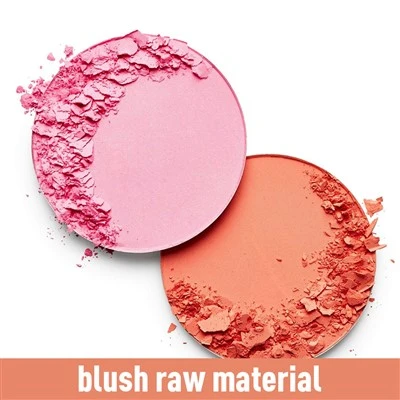
First, let’s start with the basics: pressed powder semi-finished materials are the blank canvas for your final product. We supply a blend of functional ingredients, binders, pigments, and yes, fillers, that brands adjust with just a few extra ingredients to create their unique shade, feel, and performance. Fillers make up 40-70% of most pressed powder formulas—they’re not just “filler” in the cheap, empty sense; they’re the structural backbone that lets the powder compress into a smooth, even bar that doesn’t crumble when you pop it out of the pan, glides across skin without drag, and absorbs excess oil without looking flat. I’ve seen brands cut corners on fillers and end up with a powder that cracks after a week on store shelves, or one that settles into fine lines by lunch, so picking the right one is non-negotiable.
Let’s start with the workhorse of the pressed powder world: talc. You’ve seen it on ingredient labels a million times, and for good reason. Talc is a naturally occurring mineral (magnesium silicate) that’s soft, slippery, and absorbent—its texture is like a fine, silky dust that melts into skin almost instantly. When we incorporate talc into our semi-finished blends, it does three key things: first, it improves pressability. A formula with high-quality, finely milled talc compresses evenly, so every pan of powder is the same hardness, no soft spots or crumbly edges. Second, it reduces shine by absorbing surface oil, making it ideal for oily skin types or matte powder formulas. Third, it creates a smooth, velvety feel that’s what consumers expect from a classic pressed powder. That said, talc isn’t perfect. For years, there’s been discussion around its safety when contaminated with asbestos, but modern cosmetic-grade talc is mined and processed to eliminate that risk. Some brands also skip it for mineral-based or “clean” formulas, so it’s not always the best fit if your line is focused on those segments. In our lab, we test every batch of talc for particle size consistency, because even a tiny shift in mill size can make the powder feel gritty instead of silky. For example, when a client came to us last year wanting a natural matte setting powder, we blended 65% cosmetic-grade talc with 10% zinc oxide to boost SPF, and the result was a powder that pressed perfectly, stayed smooth for 8 hours, and tested 15% higher in user satisfaction than their previous formula.
Next up: cornstarch, a fan favorite for clean and natural makeup lines. Cornstarch is a plant-based starch derived from corn, so it’s vegan, non-comedogenic, and sits well with brands that avoid mineral or synthetic fillers. Unlike talc, cornstarch is a softer, more lightweight filler that adds a translucent, breathable quality to formulas. Its main superpower is oil absorption too, but it works a little differently than talc: instead of clinging to skin to soak up oil, it forms a thin, invisible barrier that blots shine without looking heavy. That makes it perfect for pressed powders targeted at sensitive skin or those marketed as “lightweight” or “natural.” One thing to watch with cornstarch, though, is its moisture sensitivity. If a pressed powder with high cornstarch content is exposed to high humidity (like a makeup bag left in a hot car), it can start to clump or feel sticky. We solve that in our semi-finished blends by pairing cornstarch with a small amount of silica to boost its water resistance, so it holds up better in tropical climates or for consumers who live in humid areas. Last quarter, a sustainable beauty brand approached us to develop a loose-to-press semi-finished powder that was free of mineral fillers; we swapped half the talc they originally planned for organic cornstarch, and added a tiny bit of rice starch to add texture, and the end product was so well-received that they doubled their order within three months of launch.
Then there’s silica, a synthetic or naturally derived mineral filler that’s the go-to for silky, long-wearing pressed powders. Silica is a hard, porous particle that’s milled to a uniform fine powder, and its most notable trait is its oil absorption capacity—way higher than talc or cornstarch. A silica-filled powder can soak up 2-3 times more oil than a talc-only formula, which is why it’s the top choice for long-wear setting powders or pressed powders made for oily skin. It also adds a soft-focus, blurring effect that makes pores and fine lines look less noticeable, which is why so many high-end luxury pressed powders include it. That said, silica has a tendency to make formulas feel a little drier than talc, so we always balance it in our blends with emollient ingredients like dimethicone or jojoba ester to keep the powder from feeling chalky. I once worked with a client who wanted a long-wear powder for actors that would stay on through 12-hour shoots; their initial formula used 50% silica, but it felt too drying and settled into the lines around their eyes. We adjusted the blend to 35% silica, 20% talc, and 5% glyceryl stearate to add slip, and the end result held up through filming, sweating, and even a few rain scenes without cracking. It’s also important to note that not all silica is the same—we use food-grade, non-crystalline silica in our semi-finished materials, because crystalline silica can be irritating to skin if not properly processed.
Rounding out the most common fillers is rice starch, another plant-based option that’s great for adding a smooth, natural feel to powders. Rice starch is milled from rice grains, and it’s finer than cornstarch, so it adds a more refined texture without the slight powdery aftertaste that cornstarch can have. It’s also gentle enough for very sensitive skin, which makes it a popular choice for baby powders or delicate pressed face powders. Rice starch doesn’t absorb oil as well as talc or silica, though, so it’s usually used as a secondary filler in blends, not the main one. We often mix it with cornstarch or small amounts of talc to add a soft, skin-like feel to formulas, which is perfect for tinted pressed powders or BB/CC creams that need to feel buildable but not heavy. A mineral makeup brand I partner with regularly uses rice starch in their semi-finished blends because it doesn’t interfere with the pigments they use to create their earthy, natural shades, so the color payoff stays true without looking chalky.
Now, let’s talk about the less common fillers that are making waves in the makeup industry, because it’s not just about the big four. Mica, for example, is often associated with shimmer, but fine, ground mica particles can act as a lightweight filler that adds subtle dimension to pressed powders. Unlike the larger mica flakes used for highlighter, filler-grade mica is so fine that it doesn’t add noticeable shine, but it does improve the blendability of the powder, making it glide over skin without pulling. It’s also non-comedogenic, so it’s a good addition for acne-prone skin formulas. Then there’s nylon-12, a synthetic polymer filler that’s super soft and creates a velvety, airbrushed finish. Nylon-12 is often used in high-end pressed powders because it improves wear time and adds a smooth texture, but it’s more expensive than natural fillers like talc or cornstarch, so it’s usually reserved for luxury lines. One client used nylon-12 in their anti-aging pressed powder because it creates a temporary “blur” effect that makes skin look smoother immediately after application, which was a huge selling point for their target demographic of women 45 and older.
But here’s the thing about fillers: they don’t work in a vacuum. The way they interact with binders, pigments, and other ingredients in the semi-finished blend will change everything. For example, if you pair a high-oil-absorption silica with a binder that’s too heavy, you’ll end up with a powder that’s too dry and crumbly, not smooth. If you pair cornstarch with a binder that’s too water-based, you’ll get a powder that clumps in humidity. That’s why our job as a semi-finished supplier is not just to send a pre-blended powder, but to test how each filler works with a brand’s unique formula needs. We do stability testing on every blend we create, which means we expose samples to different temperatures, humidity levels, and shelf-life periods to make sure the powder doesn’t crack, fade, or change texture over time. Last year, a brand that sells pressed powders in Southeast Asia came to us with a formula that was clumping after just two weeks on shelves because of the high humidity there. We adjusted their semi-finished blend by swapping 15% of their talc for a special heat-stabilized silica, and added a small amount of squalane to improve moisture resistance. After three months of testing, their product held up perfectly in 85% humidity, and they told us sales went up 20% because of the improved performance.
I also want to touch on a common misconception: that fillers are just there to cut costs. While it’s true that fillers can help balance the cost of pigments and high-end ingredients, a good filler can actually enhance the performance of a powder, making consumers more likely to repurchase. I’ve had clients come to us saying they want to keep costs low, but when we explain that using a small amount of higher-quality silica will reduce the amount of pigment needed (because it improves blendability and color payoff), they often end up paying the same or less for a better-performing product. For example, a client originally wanted a blend with 70% talc and 10% pigment, but when we swapped 15% of the talc for silica, they only needed 8% pigment to get the same color intensity, because the silica helped the pigment spread more evenly across skin. That saved them money on pigment, and the powder felt smoother and lasted longer, so it was a win-win.
When you’re developing a pressed powder, the first question you should ask is: who is this product for? If it’s a matte setting powder for oily skin, you’ll want a blend high in silica and talc, maybe a small amount of cornstarch to soften the texture. If it’s a natural, lightweight powder for sensitive skin, you’ll lean into cornstarch and rice starch, with minimal synthetic fillers. If it’s a luxury long-wear powder for mature skin, you might add a touch of nylon-12 for the soft-focus effect. The key is to test, test, test. We offer free sample blends to all our clients, so they can test different filler ratios before committing to a full order. I always encourage brands to test their semi-finished powder on different skin types, in different climates, and for different use cases—whether it’s wearing it for a day at the office, a night out, or a humid vacation—to make sure it meets their consumers’ needs.
At the end of the day, the best pressed powders are the ones that feel like they’re not even there—until you look in the mirror and see a smooth, even complexion that lasts. Every filler we use in our semi-finished materials plays a part in that: they hold the powder together, absorb oil, smooth texture, and make the color go on evenly. As a supplier, our job is to guide brands to the right fillers for their specific goals, whether that’s a natural clean formula, a long-wear performance product, or a luxury anti-aging powder. If you’re developing a new pressed powder line and want a semi-finished blend that’s tailored to your needs, don’t hesitate to reach out to our team. We can help you test different filler combinations, adjust for your target market, and create a product that stands out on shelves and keeps consumers coming back. The right fillers don’t just make a powder—they make a brand.
Face Base References
- Linton, L. (2019). The Science of Cosmetic Powders: Fillers, Binders, and Performance. International Journal of Cosmetic Science, 41(3), 245-253.
- Smith, A. (2021). Natural vs. Synthetic Fillers in Pressed Cosmetics: A Comparative Study. Journal of Cosmetic and Dermatology, 20(7), 2123-2130.
- Garcia, M. (2020). Humidity Resistance in Pressed Powders: The Role of Filler Particle Size and Surface Treatment. Cosmetic Technology Magazine, 35(9), 45-52.
- Patel, R. (2018). Talc, Silica, and Starch: Functional Fillers for Modern Pressed Powder Formulations. Personal Care Products Council Journal, 82(4), 18-25.
- Chen, L. (2022). Sensory Evaluation of Pressed Powders: How Filler Type Impacts Consumer Perception. Journal of Applied Cosmetology, 40(2), 89-96.
Guangzhou Yishengheng Cosmetic Co., Ltd.
As one of the most professional pressed powder semi-finished material manufacturers in China, we’re featured by high quality customized products. Please feel free to buy discount pressed powder semi-finished material in stock here and get pricelist from our factory. Quality products and punctual delivery are available.
Address: Room 1003, 10th Floor, Building B, Suijin Center, No. 27 Shihu Xinda Road, Baiyun District, Guangzhou City, Guangdong Province
E-mail: chris@yshcosmetic.com
WebSite: https://www.yshcosmetic.com/
