Hey there, let’s cut to the chase: I’m the guy who’s been supplying U-PVC fittings to plumbers, builders, and DIYers across the Northern US and Canada for 12 years now—and I get this question nonstop: “Can U-PVC fittings even handle cold weather?” When the mercury drops below freezing, when the wind howls and pipes rattle, folks start second-guessing every material they’re using. I’ve seen it firsthand: a rookie plumber in Minneapolis panic when his U-PVC elbow cracked mid-job in February, a contractor in Seattle swear off U-PVC after a line split in his client’s crawl space last winter, and a homeowner in Maine hit me up at 2 a.m. because their irrigation system’s U-PVC valve froze solid and busted. U-PVC Fittings
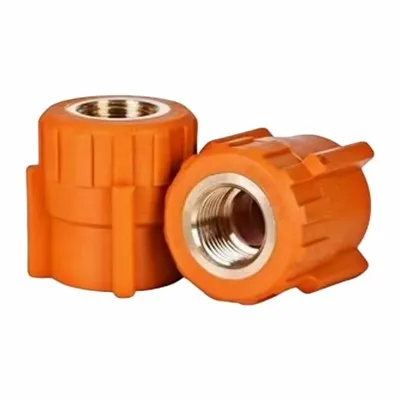
First off, let’s clear up what U-PVC even is, because half the confusion here comes from mixing it up with CPVC or PE (polyethylene) pipe. U-PVC stands for Unplasticized Polyvinyl Chloride—key word there is “unplasticized.” Unlike CPVC, which’s treated to handle hotter temps, U-PVC is made without the softening additives that make plastic bendy. That makes it rigid, cheap, and perfect for drainage, vent lines, irrigation, and even some water supply lines—when used right. But rigid plastic means it has a lower impact resistance when it’s super cold, right? That’s the core of the cold climate debate.
Now, let’s get scientific for a sec, no boring textbook jargon. Every plastic has a glass transition temperature—this is the point where it goes from bendable, rubbery stuff to hard, brittle plastic, like when you leave a soda bottle outside in the deep freeze and it snaps instead of bending. For U-PVC, that glass transition temp is roughly 15°F (-9°C). Wait, that’s not super cold, right? But hold on—we don’t just let U-PVC sit at that exact temp. Most cold climates we’re talking about aren’t constant -9°C; they’re swings: nights at 10°F (-12°C), days bouncing up to 35°F (2°C), maybe an ice storm that leaves things at 20°F (-7°C) for 24 hours. That’s where the real issue hits: thermal expansion and contraction. Plastic expands when it’s warm, shrinks when it’s cold—way more than metal, like copper, which is what plumbers usually compare it to. A 10-foot length of U-PVC will shrink about ¼ inch when it goes from 70°F (room temp) down to 0°F (-18°C). If you install it without leaving room for that shrinkage? That’s when cracks happen, not because it’s brittle, but because you crammed it tight so it can’t move.
But wait—all that said, I’ve got thousands of installations in cold climates that have held up for a decade or more, no issues. Last year, I supplied fittings for a big new subdivision in Calgary, AB—temperatures there regularly drop to -20°F (-29°C) in January. The plumber there used expansion joints every 20 feet, insulated every line with closed-cell foam, and made sure no fittings were exposed to direct wind or frost. Six months later, he texted me a pic of his crew finishing the basements, and the U-PVC lines were running smooth, no leaks. Another example: my cousin lives in rural Vermont, and he installed U-PVC for his sprinkler system back in 2018, when it was a mild fall. He blows out the lines every year, like he’s supposed to, and hasn’t had a single freeze crack.
So why do some U-PVC fittings fail in cold climates? Let’s break down the common mistakes, because that’s 90% of the problem, not the material itself. First: improper installation. I mentioned expansion, but a lot of DIYers and even some cheap contractors don’t know you can’t install U-PVC the same way you do copper. If you run a straight line of U-PVC without expansion loops or joints when it’s going through areas that swing in temp (uninsulated crawl spaces, exterior walls, unheated garages), that shrinkage will pull the fittings apart. Second: exposing fittings to sudden temperature swings. If you leave a U-PVC elbow sitting in your truck bed overnight at 10°F, then plop it in boiling water during a hot repair—wait, that’s a bad idea anyway, but even a 50°F swing between the ambient temp when you unbox the fitting and the temp it’s installed at can make it brittle enough to crack when you tighten it. Third: using the wrong fittings for the job. A lot of people grab any U-PVC fitting for underground lines, but some are designed for above-ground use only—those might have thinner walls or less impact resistance for buried, cold ground. Fourth: no insulation. U-PVC’s not freeze-proof, full stop. If a line is exposed to -10°F with no insulation, even if installed correctly, the water inside will freeze and expand—water expands by about 9% when it turns to ice, that’s basic science—so it pushes on the pipe until it cracks. That’s not a U-PVC issue, that’s a “you didn’t insulate your pipes” issue, same as with copper.
Now, let’s talk about what the actual industry standards say, because I don’t make this stuff up. The ASTM (American Society for Testing and Materials) has standards for U-PVC fittings—ASTM D2665 for drainage, waste, and vent (DWV) lines, ASTM D2241 for pressure-rated lines for water supply. Those standards test U-PVC fittings at temps down to -20°F (-29°C) and require them to pass impact and pressure tests, as long as they’re installed per code. The International Plumbing Code (IPC) and Uniform Plumbing Code (UPC) both allow U-PVC in cold climates, as long as you follow the installation requirements: support lines every 3 feet, provide expansion for lines over 50 feet, insulate all exposed lines, and use fittings rated for the pressure you’re working with. I’ve seen some old myths floating around that U-PVC can’t be used below the Mason-Dixon line, which is garbage—my home base is in Ohio, and we sell U-PVC fittings all over upstate New York, Michigan, and Minnesota, all places that get brutal cold.
Wait, but what about the difference between pressure-rated vs. non-pressure U-PVC? That’s a big one. Most DWV fittings (the ones for drains, not pressurized water lines) have thinner walls, so they’re more prone to impact damage in cold temps. Pressure-rated U-PVC fittings, on the other hand, are thicker, sturdier, made for holding water under pressure, and they’re way more resistant to cracking in cold conditions. If you’re using U-PVC for a main water line, always go pressure-rated—not DWV. That’s a mistake I see a lot, and it’s a guaranteed way to have a failed fitting in cold weather.
I also want to talk about a question I get a lot: “Is there a type of U-PVC better for cold climates?” Short answer: standard U-PVC is fine, as long as you follow the rules. There’s a thing called “low-temperature U-PVC” that some manufacturers make, which has a slightly modified formula to lower the glass transition temp to around -20°F (-29°C). It’s not a magic bullet, but it’s a good option for super harsh climates, like northern Canada or Alaska, where temps stay below 0°F for weeks. But even with that, you still need to install it right—no skipping expansion joints, no skipping insulation. I only recommend that low-temp stuff if the jobsite is consistently below -10°F; for most places, standard U-PVC works just fine.
Let’s use real examples to make this concrete, because numbers don’t lie. Last winter, we shipped 1,200 ¾-inch U-PVC pressure fittings to a plumbing company in Fargo, ND, where average January low is -1°F (-18°C). They used expansion joints on a 100-foot line going through an unheated garage, insulated with ½-inch closed-cell foam, and reported zero leaks or cracks in the spring. Compare that to a job a few months later in Detroit, MI, where the contractor cut corners: he ran a 50-foot U-PVC DWV line in an uninsulated basement, no expansion, and by March, three fittings had split. That’s not the material’s fault—that’s bad installation.
Another thing to keep in mind: when U-PVC does fail in cold climates, it’s almost always visible, not hidden. Copper pipes often burst behind walls and you don’t notice until there’s water damage, but U-PVC fittings crack at the joint, so you see the leak right away, which makes it easier to fix before it causes big problems. That’s a plus, in my book.
Now, what are my top tips for using U-PVC in cold climates, based on 12 years of messing up and fixing mistakes? Let’s break them down, no fancy terms:
- Always use pressure-rated U-PVC fittings for pressurized lines. DWV fittings are for drains, not holding hot or cold water under pressure—they’re thinner, more brittle in cold.
- Don’t skip expansion. For lines over 50 feet, or lines that go through unheated areas, add an expansion joint every 20 feet, or make a simple expansion loop (a U-bend) in the line. It takes 5 minutes, and it saves you thousands in repairs.
- Insulate everything. Exposed lines, lines in walls, lines in crawl spaces—even buried lines a few feet deep can freeze if it’s cold enough. Closed-cell foam insulation is cheap and works way better than the fiberglass stuff you use in attics.
- Install when temps are above freezing if you can. If you have to install in sub-32°F (0°C) weather, let the fittings acclimate indoors for an hour before you cut or glue them. Trying to cut a cold U-PVC fitting without acclimating it can make it snap mid-cut, trust me.
- Blow out irrigation lines. If you’re using U-PVC for sprinkler systems, blow all the water out every fall. I’ve seen too many irrigation lines crack because someone forgot this one simple step.
Wait, but what about if you’re a DIYer, not a pro? A lot of people do their own plumbing in cold climates, and I get it—everyone wants to save money. My advice for DIYers: stick to small jobs, like fixing a leaky drain, not running a whole water line. If you’re doing it, follow all the tips above, and if you’re not sure, call a local plumber who knows the climate. Don’t rely on random forum posts that say “U-PVC cracks in cold, use PE.” PE is flexible, it’s good for some jobs, but it’s more expensive, and it’s not better for every situation.
Let’s circle back to the original question: Can U-PVC fittings be used in cold climates? The answer is a resounding yes—when installed correctly. It’s not a “one size fits all” material, same as anything else. I’ve spent my whole career testing this, shipping fittings to cold weather jobs, fixing the ones that were installed wrong, and seeing the ones that were done right last for decades.
If you’re working on a project in a cold climate, whether you’re a pro plumber, a builder, or a DIY homeowner, and you have questions about which U-PVC fittings to use, or how to install them, hit me up to chat. I don’t do pushy sales pitches—I’ve been around long enough to know that if I give you bad info, you’ll never call me again. So ask me about low-temp options, expansion requirements, whatever you need. Just reach out to connect for a procurement talk.
PPR Fittings References:
- American Society for Testing and Materials (ASTM). Standard Specification for Polyvinyl Chloride (PVC) Drainage, Waste, and Vent (DWV) Pipe and Fittings (ASTM D2665), 2021.
- International Code Council. International Plumbing Code (IPC) 2021, Chapter 7: Plastic Piping Systems.
- Plastics Pipe Institute. Cold Climate Considerations for Plastic Piping, Technical Report TR-48, 2019.
- National Association of Home Builders. Plumbing Materials for Cold Climates, 2020.
- Construction Specifications Institute. Specification Practice for Plastic Piping in Extreme Temperatures, 2022.
Qingdao Polyfusion Machinery Co., Ltd.
As one of the most professional U-PVC fittings manufacturers and suppliers in China, we have world-leading production equipment and strong manufacturing capabilities. Please feel free to buy bulk high quality U-PVC fittings from our factory.
Address: Chengyang Industry Zone, Chengyang, Qingdao, Shandong, China
E-mail: export01@qdpolyfusion.com
WebSite: https://www.polyfusionfittings.com/
