If you’ve ever worked with PVC cylinders—whether for packaging food, electronics, pharmaceuticals, or even craft supplies—you know that getting the edge curl right makes all the difference. Too loose, and the cylinder leaks or looks flimsy; too tight, and the PVC cracks or warps, wasting material and time. As a supplier of PVC Cylinder Edge Curling Side Machines, I get asked about this every single day from both new buyers and seasoned manufacturers: what exactly is the temperature control system in these machines, and why does it matter so much? PVC Cylinder Edge Curling Side Machine
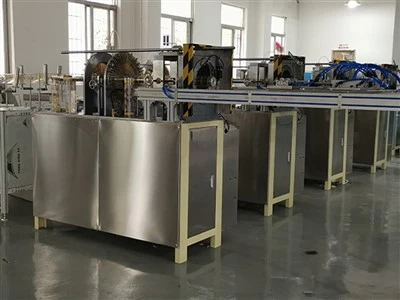
I’ve spent 12 years walking factory floors, troubleshooting curling machines, and fine-tuning every part of these tools to make sure our clients don’t have to deal with scrap rates that eat into their profits. Today, I want to break down that temperature control system like I would to a first-time buyer who’s standing in our demo lab, leaning over a running machine, squinting at a curled PVC edge, and wondering why some runs are perfect and others aren’t.
Let’s start with the basics: PVC isn’t a single material. It’s a thermoplastic, which means it softens when heated and hardens when cooled—no chemical reaction required, just temperature and pressure. That’s the core of edge curling: you take the sharp, straight edge of a PVC cylinder, heat just that edge until it’s pliable enough to bend without breaking, then curl it into a neat bead or flange that seals securely, protects the cylinder’s contents, and gives the package a polished look. Mess up the heat, and you’ve got cracked PVC, uneven curls, or edges that pop off after a week of shipping. That’s why the temperature control system isn’t just a “nice feature”—it’s the heart of the whole machine.
First, let’s talk about the core components of this system, because every part works together, like a well-oiled team. The most critical part is the heating element itself. Our machines use two main types, depending on the PVC grade and thickness our clients work with: contact heating elements and non-contact (infrared) heating units. Contact elements are solid, precision-machined metal bars—usually stainless steel or chromium-plated copper—shaped exactly to match the curl profile you want. For example, if a client needs a 5mm tight bead for a pharmaceutical vial cylinder, the heating bar has a 5mm radius along its edge. This is the most common for standard PVC, because it transfers heat directly to the edge, no waste, and responds fast. Infrared (IR) elements, on the other hand, are for thinner PVC (under 0.5mm) or specialty PVC blends that might stick to contact bars. IR heats the surface of the edge without touching it, so you get uniform heat even on very thin, delicate material.
Next, we have the temperature sensors. These are the eyes of the system. You can’t just turn a heating bar to “high” and hope for the best—PVC has a narrow processing window. Most rigid PVC starts softening at around 140°C (284°F) and reaches its optimal pliability for curling at 160–180°C (320–356°F). Go above 190°C (374°F), and you get thermal degradation: the PVC turns yellow, gets brittle, and crumbles when you try to curl it. Go below 140°C, and the edge is too stiff to bend evenly, leading to gaps or cracks. So our sensors are calibrated to measure the temperature of the heating element (and in contact heating, the edge itself) within ±0.5°C accuracy. That’s not a typo—half a degree. We use either thermocouples (which sit right on the heating bar, sensing the metal’s temperature) or non-contact IR sensors that point directly at the PVC edge mid-curl, so we’re not just measuring the heater, we’re measuring the actual material we’re working with. That’s a big difference from cheaper machines that only measure the heater’s temperature, which can be off by 5–10°C if the heater wears out or the contact is inconsistent.
Then there’s the control unit—the brain of the operation. This is where the sensor data goes, and where the machine adjusts the heat in real time. Our control systems are PLC-based (Programmable Logic Controllers) with a touchscreen interface, so operators can input exactly what they need: PVC thickness, grade, curl type (tight bead, loose flange, etc.), and line speed. For example, if an operator is running 1mm thick food-grade PVC at 10 meters per minute, the control unit will adjust the heater’s power to keep the edge at 170°C, no matter what. If the line speed goes up because the operator wants to boost output, the control unit automatically cranks up the heat a little, because the PVC is moving past the heater faster and needs to reach the same temperature in less time. If the sensors pick up that the heater is losing a bit of heat (from air flow in the factory, or wear on the contact bar), the control unit sends a signal to the heating element to add a little power to compensate. No more human error—this runs 24/7, and it’s consistent shift after shift.
Wait, I know what you’re thinking: what about cooling? Because after you heat the edge, you have to hold that curl shape while the PVC hardens, right? That’s part of the temperature control system too, and it’s just as important as the heating. After the curling station (the part that actually bends the heated edge into shape), there’s a cooling section, usually with forced air or water-cooled mandrels. The cooling system is temperature-controlled too, keeping the mandrels at a steady 20–30°C, so the PVC hardens evenly as it’s being held in the curl shape. If cooling is too weak, the PVC will spring back into a straight edge; too strong, and it might crack from rapid temperature change. Our control unit syncs the cooling temperature directly to the heating temperature—if the edge is heated to 170°C, the mandrel is set to 25°C, calibrated specifically for the PVC grade. That level of sync is what sets our machines apart from cheaper ones, where heating and cooling are separate, manually adjusted systems that can take hours to get right, and still be off by a lot.
Now, let’s talk about why this matters in real-world factory scenarios, not just tech specs. Last year, a client from Detroit reached out to us because their old curling machine was running 1200 PVC cylinders a day, with a 12% scrap rate. That’s 144 cylinders going to waste every single day—costing them thousands of dollars a month in material and labor. They were using a machine with a basic on/off temperature control system: when the heater got too cold, it turned on full blast, when it got too hot, it turned off. This caused temperature swings of up to 20°C, so half the edges were too hot (brittle) and half too cold (too stiff), with no way to adjust for the PVC’s grade, which was a slightly softer food-grade blend than standard PVC. We replaced their old system with our PLC-controlled, ±0.5°C temperature control system, paired with contact heating for their 1mm PVC. Within a week, their scrap rate dropped to 1.8%—saving them over $20,000 a year, not to mention the time they spent reworking bad edges. That’s the kind of impact a solid temperature control system has, and I see it every month with new clients.
Another example: a pharmaceutical packaging client in Ireland that works with 0.3mm thick PVC for blister packs. They couldn’t use contact heating because the thin PVC would stick to the heating bar and tear, so they were using a machine with a basic IR heating system that had no real-time temperature feedback. They’d get inconsistent curl heights, and some edges would be too hot, leaving little dark spots that are a no-go for pharmaceutical packaging (they can contaminate the product, or fail FDA inspections). We installed our IR-based temperature control system with non-contact IR sensors that measure the PVC edge’s temperature directly, not just the heater, and synced it to our line speed control. Now, their curl height is consistent within 0.2mm, and they’ve had zero inspection failures related to curling in the past year. That’s non-negotiable for their industry, and the temperature control system is the reason.
I also want to address common misconceptions I hear all the time from new buyers. First: “More heat is better for faster production.” No—thermoplastics have a glass transition temperature, the point where they’re pliable. Exceed that by too much, and you get degradation, as I mentioned earlier. A good temperature control system will balance heat and line speed, so you can run faster without hurting the material. Second: “All temperature control systems are the same.” Cheaper machines use on/off control, which causes those big temperature swings, while proportional-integral-derivative (PID) control, which our machines use, adjusts the heat continuously to stay at the set point, within a fraction of a degree. That’s not a minor difference—it’s the difference between consistent curls and scrap. Third: “You have to re-calibrate the temperature for every run.” Our system saves 50+ preset profiles for different PVC grades, thicknesses, and curl types, so operators just select the right profile from the touchscreen, no manual testing needed. That cuts down setup time from 20 minutes to 2 minutes, which adds up to huge gains in production time.
Maintenance is part of the temperature control system too, right? Because even the best system will wear out if you don’t take care of it. The heating elements need to be cleaned regularly to remove PVC residue, which can build up over time and insulate the element, making it less efficient and causing temperature drops. The sensors need to be checked for dust or damage, which can throw off their readings. Our machines come with a 20-point maintenance guide specific to the temperature control system, and our service team does quarterly check-ins for clients who want that extra support. I always tell clients: a machine is only as good as its most maintained part, and the temperature control system is the most important part to keep in shape.
Let me wrap this up for anyone who’s still on the fence, or who’s dealing with inconsistent curl quality, high scrap rates, or production delays because their old machine’s temperature system can’t keep up. The temperature control system in a PVC Cylinder Edge Curling Side Machine isn’t just a set-it-and-forget-it feature—it’s the precise, synchronized combination of heating elements, high-accuracy sensors, a smart control unit, and matched cooling that turns raw PVC into a finished, usable cylinder, every single time. It’s what eliminates scrap, cuts setup time, meets strict industry standards, and lets you run your production line at maximum efficiency without worrying about bad curls.
If you’re looking to upgrade your current machine, or are in the market for a new PVC Cylinder Edge Curling Side Machine, don’t just ask about speed or curl types—ask about the temperature control system. Ask about the accuracy, the type of sensors, whether it has PID control, and if it can sync heating and cooling to your specific PVC needs. I’ve spent 12 years refining these systems, talking to factory managers, troubleshooting on the floor, and making sure every machine we build delivers consistent results. We’ve worked with packaging companies, pharmaceutical manufacturers, food producers, and craft suppliers around the world, and their success is tied directly to the temperature control system in our machines.
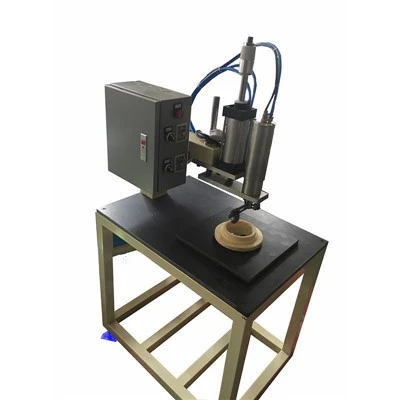
If you’re ready to stop dealing with scrap, inconsistent curls, and production delays, reach out to our team to discuss your specific needs, and we’ll walk you through how our temperature control system can work for your PVC production.
PVC Cylinder Edge Curling Side Machine References
- Harper, C. A., & Petrie, E. M. (2016). Plastics Materials and Processes: A Concise Encyclopedia. Wiley.
- Rosato, D. V., & Rosato, M. G. (2004). Injection Molding Handbook. Springer.
- PVC Processing Guidelines for Thermoplastic Edge Forming. (2021). Society of Plastics Engineers (SPE).
- Temperature Control Systems for Industrial Thermoplastic Processing. (2019). Industrial Heating Magazine Technical Report.
Titagong (Dongguan) Machinery Co., Ltd.
We are one of the most reliable manufacturers and suppliers of PVC cylinder edge curling side machine in China. With abundant experience, we warmly welcome you to buy bulk high quality equipment in stock here and get pricelist from our factory. For price consultation, contact us.
Address: No.149, Qingyi Road, Qingxi Town, Dongguan City, Guangdong Province, China
E-mail: shuaizoe@gmali.com
WebSite: https://www.titagonggroup.com/
