Hey there, it’s Jake, from [Your Company Name]—your go-to stainless steel plate supplier, and today I’m diving into one of the most common questions I get from fabricators, construction folks, and even hobbyists hitting me up in the DMs: what’s the actual density of a stainless steel plate? Let’s cut through the vague textbook stuff and get real, because this isn’t just a random number—it’s the kind of detail that messes up your entire project if you get it wrong. I’ve seen it happen: a client orders 100 plates, expects a certain weight for shipping, and ends up with a truckload that’s 500 lbs over because they used the wrong density number. No one wants that, right? Let’s break this down like we’re geeking out over a new tool, not a lab report. Stainless Steel Plate
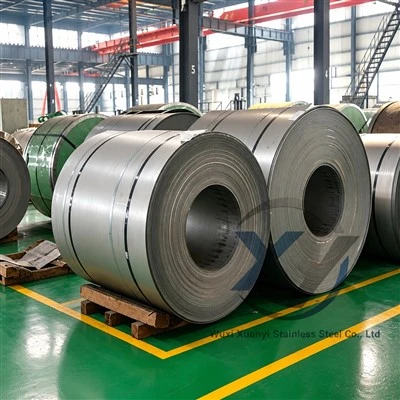
First off, let’s stop treating “stainless steel” like it’s a single metal. That’s the biggest mistake people make here. I can’t tell you how many times a customer will say “just give me the density of stainless steel” like it’s one thing, but it’s way more like a family of metals—each with their own little quirks. Most stainless steel plates you’ll find out there are either 304 or 316 grades, right? Those are the workhorses. 304’s the standard for everything from food equipment to general construction, and 316’s the marine-grade one with that molybdenum kick that stops rust in saltwater. But then there are other grades too—like 409 for exhaust systems, 321 for high-heat applications, even the fancy duplex grades for heavy-duty industrial stuff. Each of these has a tiny density shift, and that’s not nothing.
Let’s start with the big two. For 304 stainless steel plate, the density is generally around 7.93 g/cm³. Wait, but if you’re working in imperial units (which most of the US crowd I talk to is into), that converts to roughly 0.286 lbs per cubic inch, or 494.6 lbs per cubic foot. I know, units are a headache—so if you’re ordering a plate that’s ¼ inch thick, 4 feet wide, and 8 feet long, let me do the quick math for you. Volume first: 0.25 * 48 * 96 = 1152 cubic inches. Multiply that by 0.286, and you get ~329 lbs. That’s the number I tell clients when they’re calculating shipping or lifting gear. Now for 316—since it has molybdenum, which is a denser element, the density is a touch higher: around 8.0 g/cm³, or 0.289 lbs per cubic inch. That same ¼” 304 plate would be ~332 lbs in 316—small difference, but when you’re ordering 50 of those, that’s 150 extra lbs, and shipping doesn’t care if it’s “just a little.”
Now, why do other grades matter? Let’s take 409. That’s the cheaper ferritic grade used in car exhausts, right? Its density is a tiny bit lower, around 7.8 g/cm³, so that same ¼” plate would be ~324 lbs. Not a game-changer here, but when you’re working with thin-gauge stuff like wire or tubing, even a 0.1 g/cm³ shift can add up. Duplex stainless steels, like 2205—those are the heavy hitters for oil and gas, super strong. Their density is closer to 7.8 g/cm³ too, but their strength is way higher, so you’re getting more durability for the same weight.
Wait a second—why is there any variation in the first place? Because stainless steel is an alloy. We’re mixing iron with chromium (at least 10.5% to make it “stainless”) plus other elements like nickel, molybdenum, manganese, carbon, even nitrogen sometimes. Each of these elements has a different atomic weight. Nickel is denser than iron, so grades with higher nickel content (like 304 has ~8% nickel) will be a touch denser than lower-nickel ferritic grades. Carbon is lighter, so higher-carbon grades are a hair less dense. The production process matters too—if a plate is hot-rolled vs. cold-rolled, is it fully annealed? Those small changes in microstructure can tweak density by a hair, like 0.01 or 0.02 g/cm³, but that’s why I always tell clients to check the mill test report (MTR) that comes with every plate we ship. That MTR will have the exact chemical composition, so if you need precision for things like structural engineering or aerospace, you can get the exact density tailored to that specific lot.
Let’s talk real-world uses, because that’s why you’re here. If you’re a fabricator making custom kitchen counters, you’re almost always using 304, so 7.93 g/cm³ is your go-to. When you’re pricing out a project, this density number isn’t just for weight— it also affects how the metal cuts, bends, and welds. Wait, is that true? Yeah, actually. Denser metals have a bit more mass, so when you’re plasma cutting, you might adjust your speed just a tiny bit, or when you’re welding, your gas flow might need a tweak to get a clean bead. I’ve had a few new fabricators skip that detail and end up with a lopsided cut on a 10-foot countertop—oops. For marine applications, 316’s slightly higher density means it’s a bit more resistant to warping in saltwater, which is why boat builders swear by it. They’ve tested that stuff way more than I have.
Now, common myths I hear all the time. First myth: “All stainless steel has the same density.” Nope, we just covered that. Second: “Density only matters for weight calculations.” Wrong—like I said, it affects fabrication, and also things like heat transfer. Denser metals hold heat a little longer, so if you’re using stainless steel for a heat exchanger, that small density shift between grades changes how efficient it is. Third: “Higher grade = higher density.” Not always—duplex 2205 is a “higher grade” for industrial use, but its density is lower than 316, because it has less nickel and more chromium. Grade doesn’t directly equal density; chemistry does.
Wait, what about if you’re working in metric? A lot of international clients hit me up, so let’s make that easy. If you have a plate in millimeters: length (mm) * width (mm) * thickness (mm) / 1,000,000 = volume in cm³. Multiply by the grade’s density, and you get weight in grams. For example, a 1000x2000x5 mm 304 plate: (100020005)/1,000,000 = 10 cm³. 10 * 7.93 = 79.3 kg. That’s a standard 5mm plate, and that’s exactly the number I send to our European clients. Super simple, no math headache.
Let’s circle back to that MTR thing, because it’s non-negotiable for any project that needs precision. When we ship stainless steel plates, every single one has a mill test report that lists the exact chemical composition of that specific batch. So if you’re doing a structural calculation for a bridge (which I know is rare for most of you, but still), you can plug the exact nickel, molybdenum, and carbon percentages into a formula to get the precise density. For 99% of the projects out there, using the standard grade numbers (7.93 for 304, 8.0 for 316) is totally fine, but that extra check is what separates a good supplier like me from someone just selling metal without paying attention.
I’ve been in this game for 12 years, and I’ve seen so many projects go south because someone used the wrong density number. A restaurant client once ordered 20 ¼” 304 plates for a walk-in fridge, used a density of 7.8 g/cm³ instead of 7.93, so they thought each plate was 320 lbs. The forklift they rented could only handle 310 lbs per load, and they had to rearrange the entire delivery at the last minute—cost them thousands in fees. That’s why I never skip walking through this density stuff with every client, no matter how small the order is. Even a single small plate for a backyard fence should have the right weight, so you don’t order too many or too few.
Another thing: if you’re buying stainless steel plate for machining, density affects how much material you’ll have left over. Denser metals mean more mass per unit volume, so if you’re turning a plate into a gear, you might need to order a slightly thinner plate if you’re working with 316 vs. 304, because it will weigh more for the same size. I always flag that for our machining clients so they don’t waste money on extra material.
Let’s wrap this up with a quick cheat sheet, because no one wants to re-read all that. Most common stainless steel plate densities:
- 304 / 304L: 7.93 g/cm³ (0.286 lbs/in³, 494.6 lbs/ft³)
- 316 / 316L: 8.0 g/cm³ (0.289 lbs/in³, 499.4 lbs/ft³)
- 409: 7.8 g/cm³ (0.281 lbs/in³, 486.9 lbs/ft³)
- 2205 Duplex: 7.8 g/cm³ (0.281 lbs/in³, 486.9 lbs/ft³)
Quick note on 304L and 316L: those are low-carbon versions of the standard grades, used for welding where you don’t want corrosion at the weld joint. Their density is almost identical to their higher-carbon counterparts—like, 7.92 vs 7.93 for 304L—so you can safely use the standard numbers for them, no extra math needed.
Now, if you’re here because you’re planning a project and need accurate weight, have questions about which grade to use, or just want to grab a quote for stainless steel plates (whatever the size, grade, or finish), hit me up. I answer every message within a few hours, no salesy robots or hold music. I’ve worked with small contractors doing fence repairs, big construction firms doing high-rises, even hobbyists building custom BBQ pits—so I get what you need, not just the textbook stuff. Stop guessing at density numbers, stop getting burned by shipping weight surprises, and let’s make your next project go smooth.

Before I go, a quick footnote: this is based on data from the American Iron and Steel Institute (AISI) and mill standard testing, which is what we use for every plate we stock.
Hot Rolled Reinforcing Bar References
American Iron and Steel Institute. (2022). Stainless Steel Grade Data Sheets.
Steel Manufacturers Association. (2021). Standard Density Values for Common Steel Alloys.
Metals Service Center Institute. (2023). Mill Test Report Guidelines for Stainless Steel Products.
Wuxi Xuanyi Stainless Steel Co., Ltd.
Wuxi Xuanyi Stainless Steel Co., Ltd. is one of the most professional stainless steel plate manufacturers and suppliers in China. With abundant experience, we warmly welcome you to wholesale bulk durable stainless steel plate made in China here from our factory. If you have any enquiry about cooperation, please feel free to email us.
Address: Room 1207, Building 11, Shengang Metropolis Plaza, No. 299 Fangcheng Avenue, Xinwu District, Wuxi City,China.
E-mail: jscherryxy@163.com
WebSite: https://www.xuanyisteel.com/
